Codex and Orbit
Build with Codex. Ship with Orbit.
Connect Orbit MCP to Codex, then ask for the app you want. Codex can build the screens, data model, backend logic, and launch path inside Orbit.
Codex does the AI work. Orbit hosts the app.
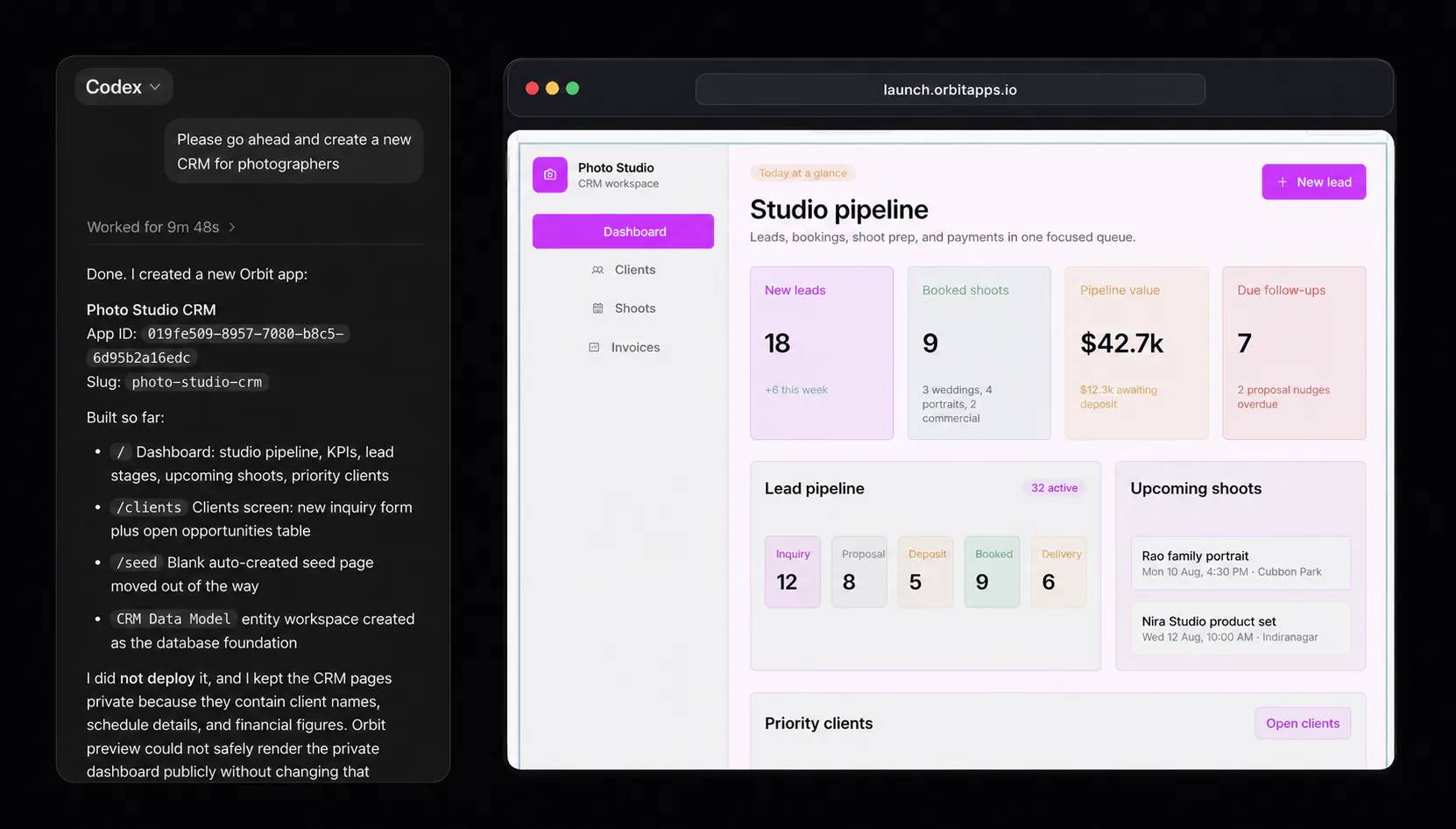
Codex building Photo Studio CRM beside the live Orbit app preview.
Codex connector setup
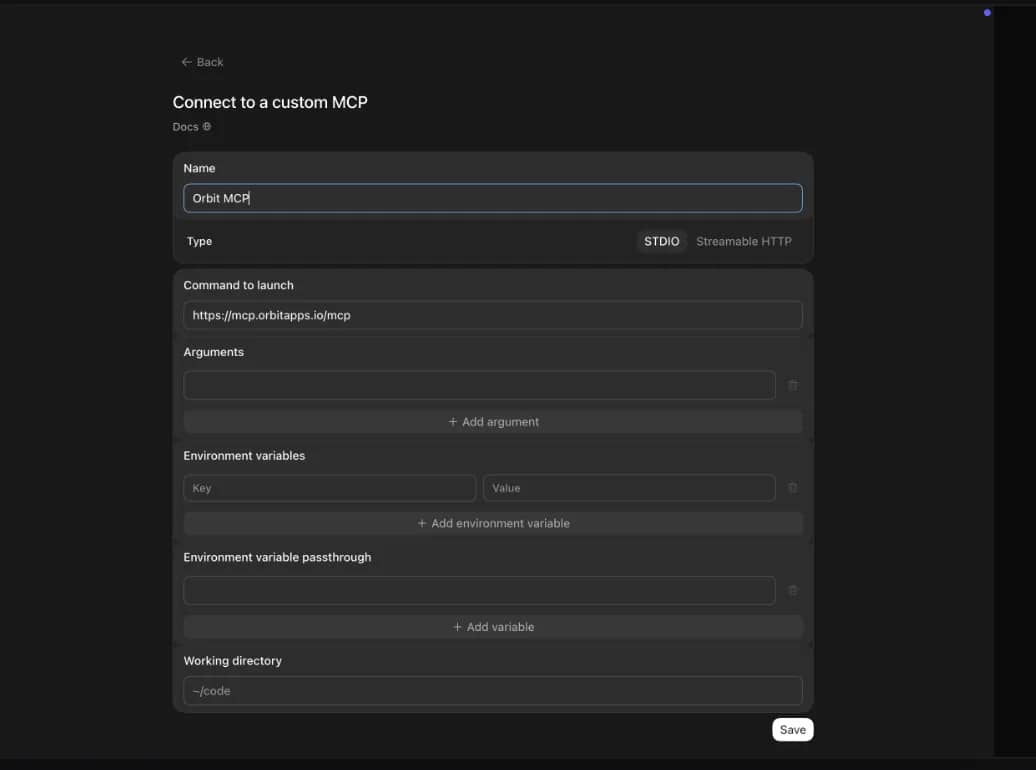
Connect Orbit to Codex in two fields
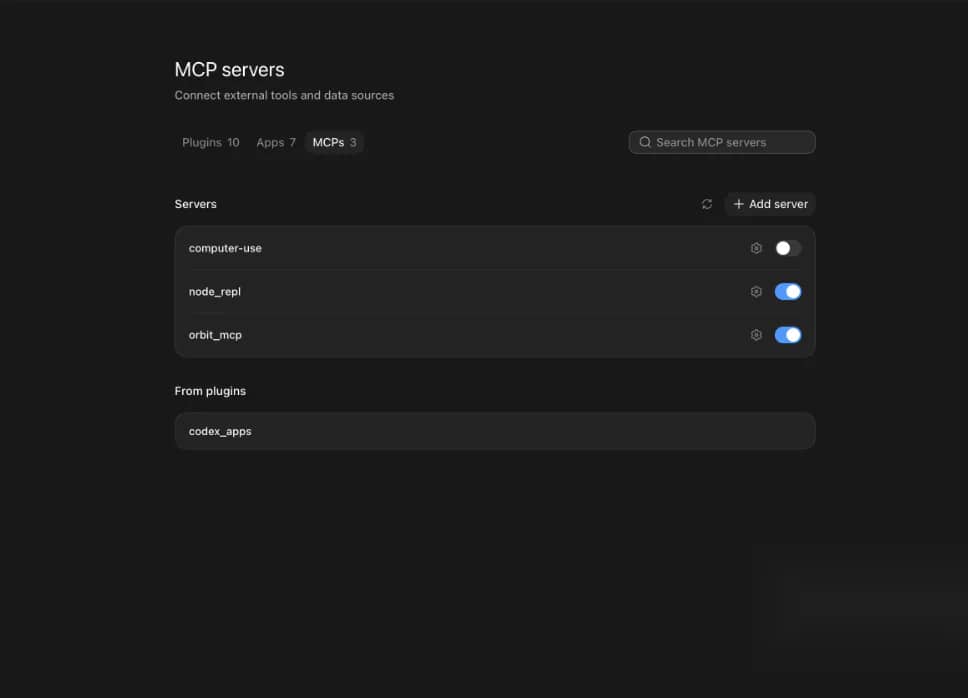
Open Codex settings, choose MCPs, and select Add server.
Choose Streamable HTTP. Enter Orbit MCP as the name and paste the URL below.
Save the server, restart Codex, then select Authenticate for Orbit MCP.
What changes, what does not
Same server. Different chair.
Codex talks to the same endpoint every other client uses, and sees the same forty-four Orbit tools. Four things about driving it from Codex are genuinely its own.
01
A browser client takes a name and a URL and it is done. Codex wants the server declared as Streamable HTTP, then a restart, then an Authenticate step, in that order. The three steps above are the whole of it, and the Authenticate step is the one people miss.
02
Codex is at its best in a repository: it reads files, edits files, and hands you a diff to argue with. Orbit sits on the far side of an HTTP call. The app it builds lives there, so there is no branch, no diff and nothing to commit. You review the running app instead of the patch.
03
Codex approval settings govern what it does to your disk. A deploy and a workflow run are neither: they are network calls that change something real and cost something real. The Orbit server tells Codex to ask you before any paid or irreversible action, so read the ask rather than approving it by reflex.
04
Start the app in a Codex task, open the same app in the browser studio five minutes later, and hand the turn after that to a different client. Each one reads and writes the same screens, the same tables and the same workflows. Nothing is exported and nothing is imported.
You already have an agent that writes code, so why send an app through Orbit at all? Because a file is not an app. Nothing in a working tree has a Postgres database, sign-in, HTTPS and a domain until somebody builds that half, and that half is where the weeks go. Orbit hands it over already running. What you give up in exchange: the app is composed from parts that exist, and there is no code export in the product.
Questions, answered
Do I need to leave Codex to build on Orbit?
No. Once Orbit MCP is connected, Codex can create and update the Orbit app from the chat.
Does Orbit charge for Codex's work?
No. Codex does the AI work, and Orbit charges nothing extra for those build steps.
Can Codex build more than screens?
Yes. Codex can shape screens, data, workflows, and launch settings through Orbit MCP.
Where does the finished app live?
On Orbit, with a Postgres backend, sign-in, hosting, and your own domain when you are ready.
What does Codex leave for me?
Review the app, steer the next changes, and decide when the result is ready to launch.
Build from the chat. Ship on Orbit.
The next thing you ask Codex to build can become a hosted Orbit app before the conversation ends.
Codex does the AI work. Orbit hosts the app.