You already know how it runs.
The bookings arrive in three places, the customer history is in somebody's head, and the invoices get written one at a time. You build one app that holds all of it, on a domain that is yours.
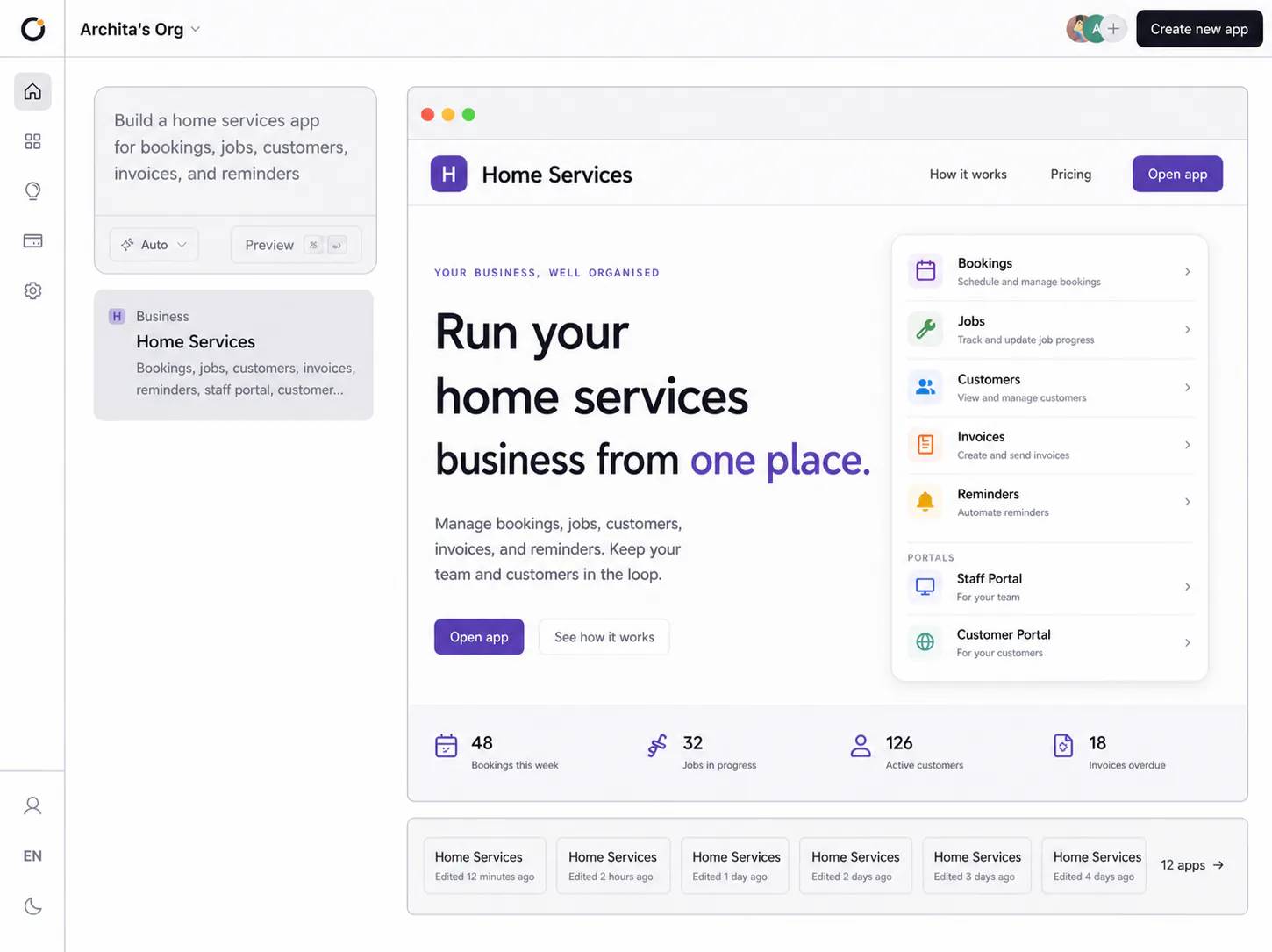
Jobs, customers, invoices and reminders, in the order your business already does them.
The week you have already had.
Two days you have lived, and the two that follow them.
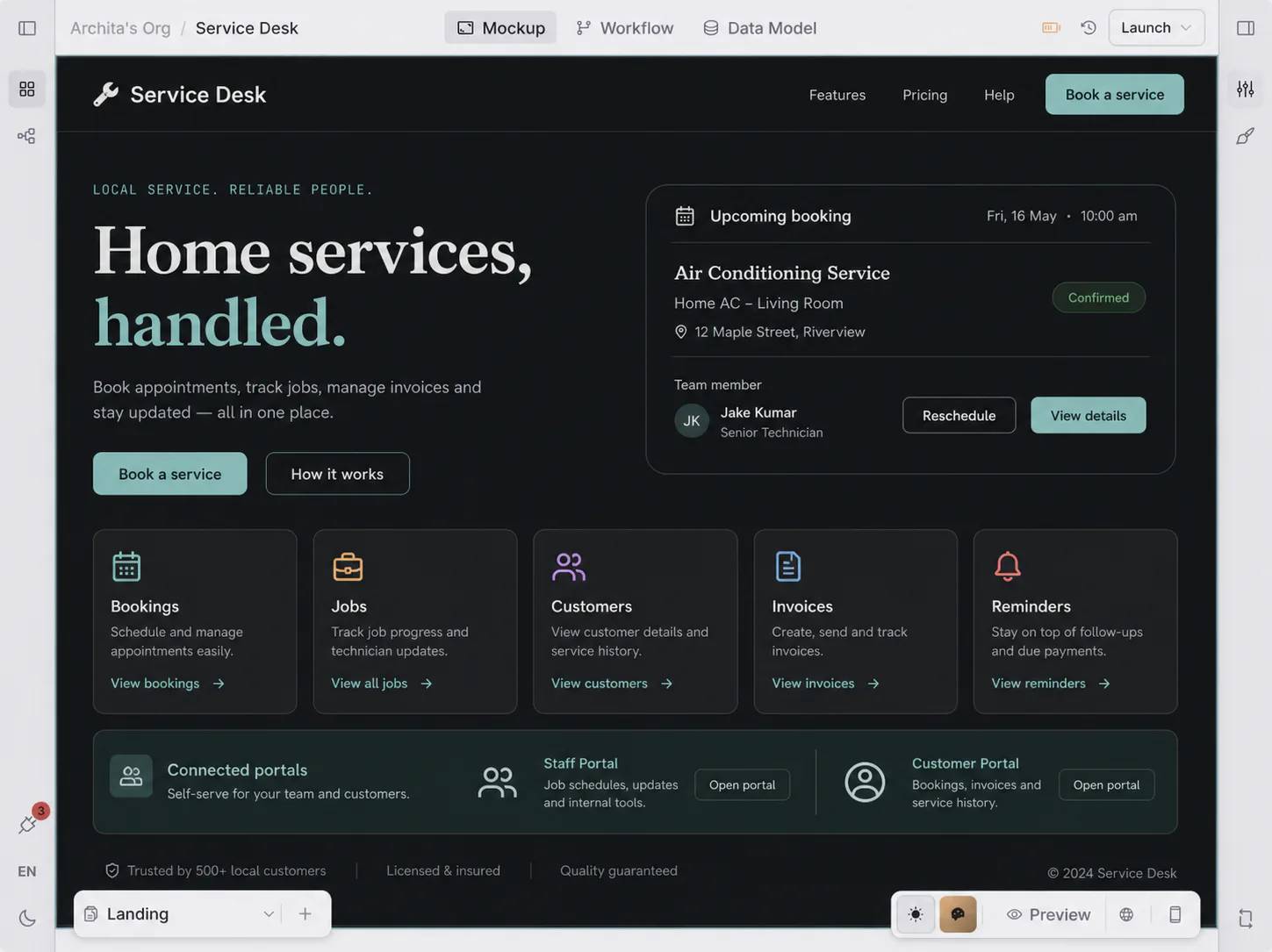
The jobs were coming in. The follow-up kept slipping.
Nothing was broken. It just lived in six places.
The home services desk at 6:12 p.m.
The same work, now visible.
What you have on the first day.
Not a prototype. The parts a business actually depends on.
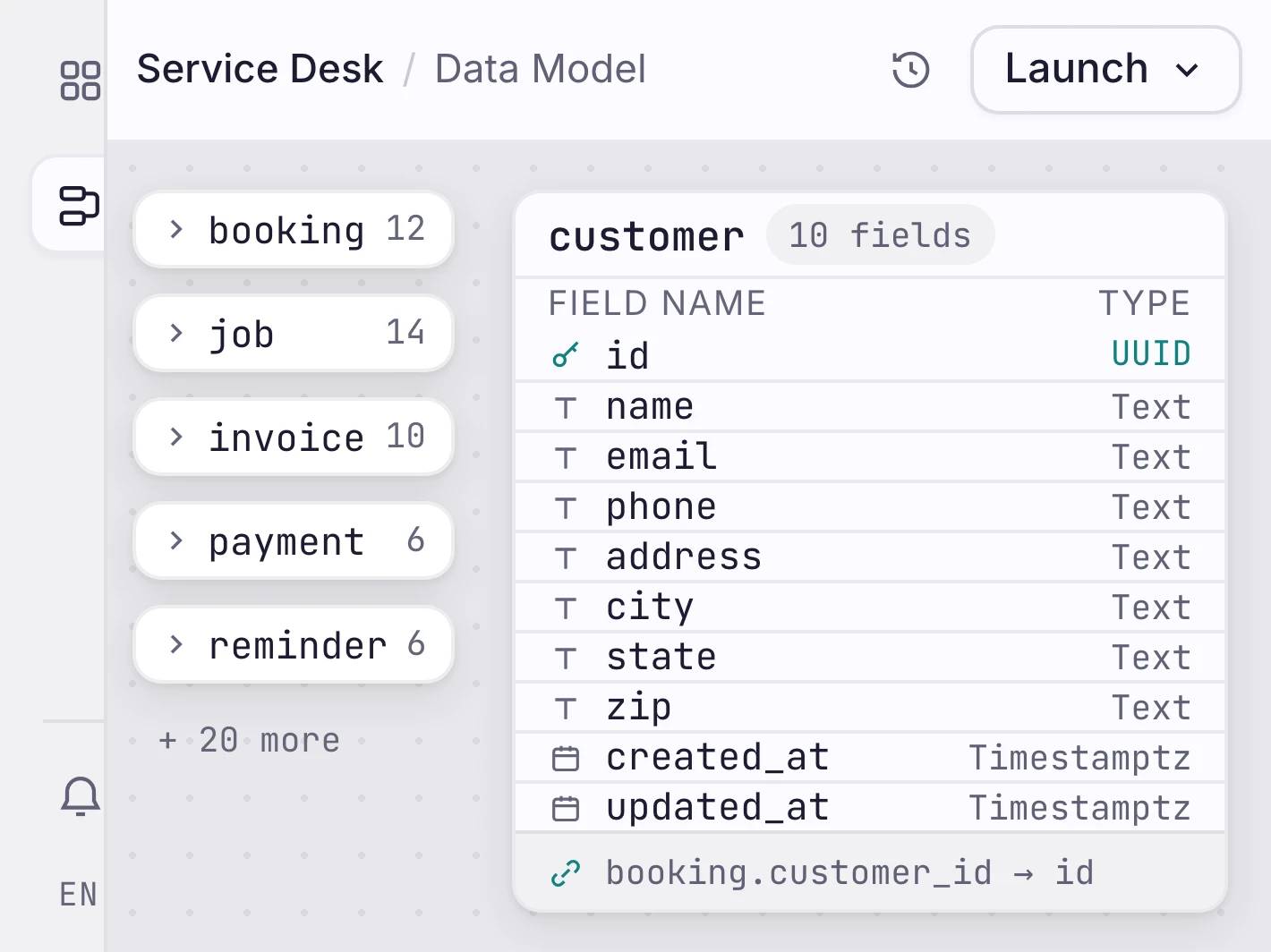
Your data, in your own database
Customers, jobs, invoices and reminders as real rows in Postgres. Not a few rows inside somebody else's table.
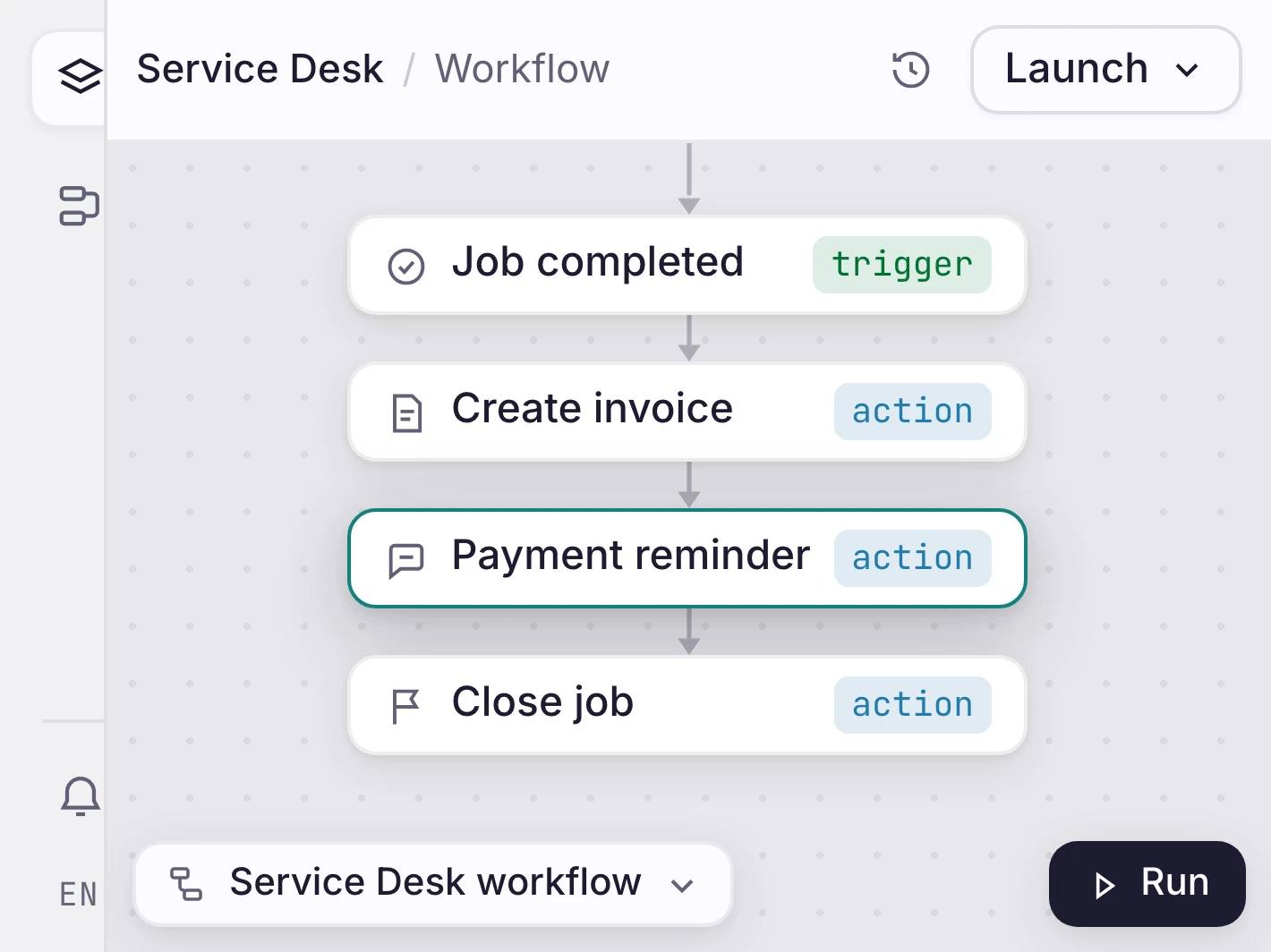
Rules that run on a server
The Thursday reminder goes out whether or not anybody has the app open.
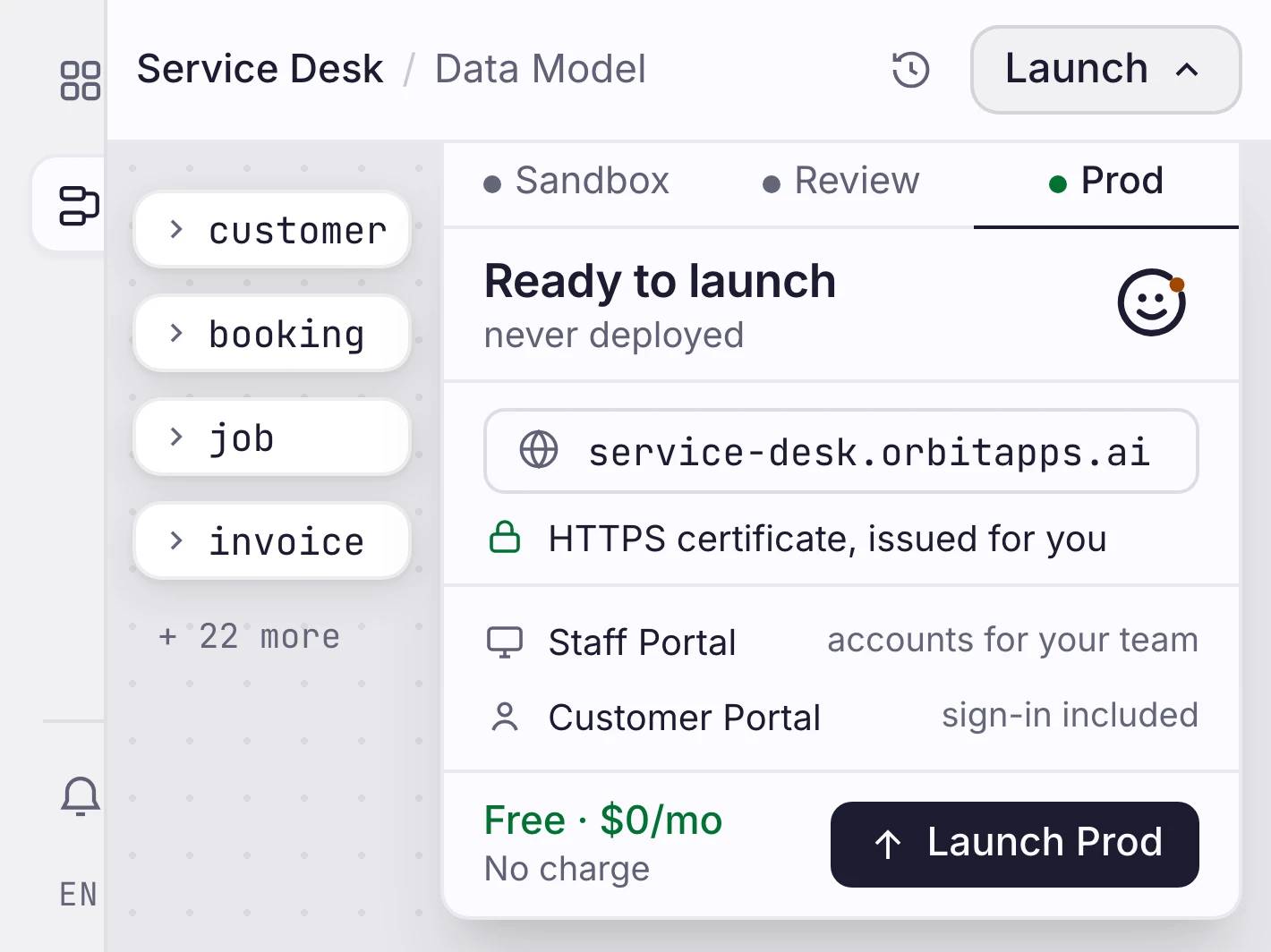
A domain, and logins
HTTPS and sign-in come wired. Staff get accounts, and customers get their own screens.
Small business, answered.
Do I need to be technical?
No. You describe how the business already runs, in plain language, and you shape the screens and the data from there.
Can it replace the tools I pay for?
Some of them. Bookings, customers, jobs, invoices and reminders can live in one app you own. Accounting and payroll are not what Orbit is for.
Can staff and customers use it?
Yes. Staff sign in and see the work assigned to them. Customers get their own screens, and see only their own jobs.
What does it cost to start?
Building is free, and your first live app stays free on your own domain. You pay when you keep a second one live.