Ship. Learn. Ship again.
Once it's live, how people use it shows you what to fix and what to build next. Point an agent at your app, make the change, and redeploy without losing a thing. It's the same app, so every turn keeps the last one's work.
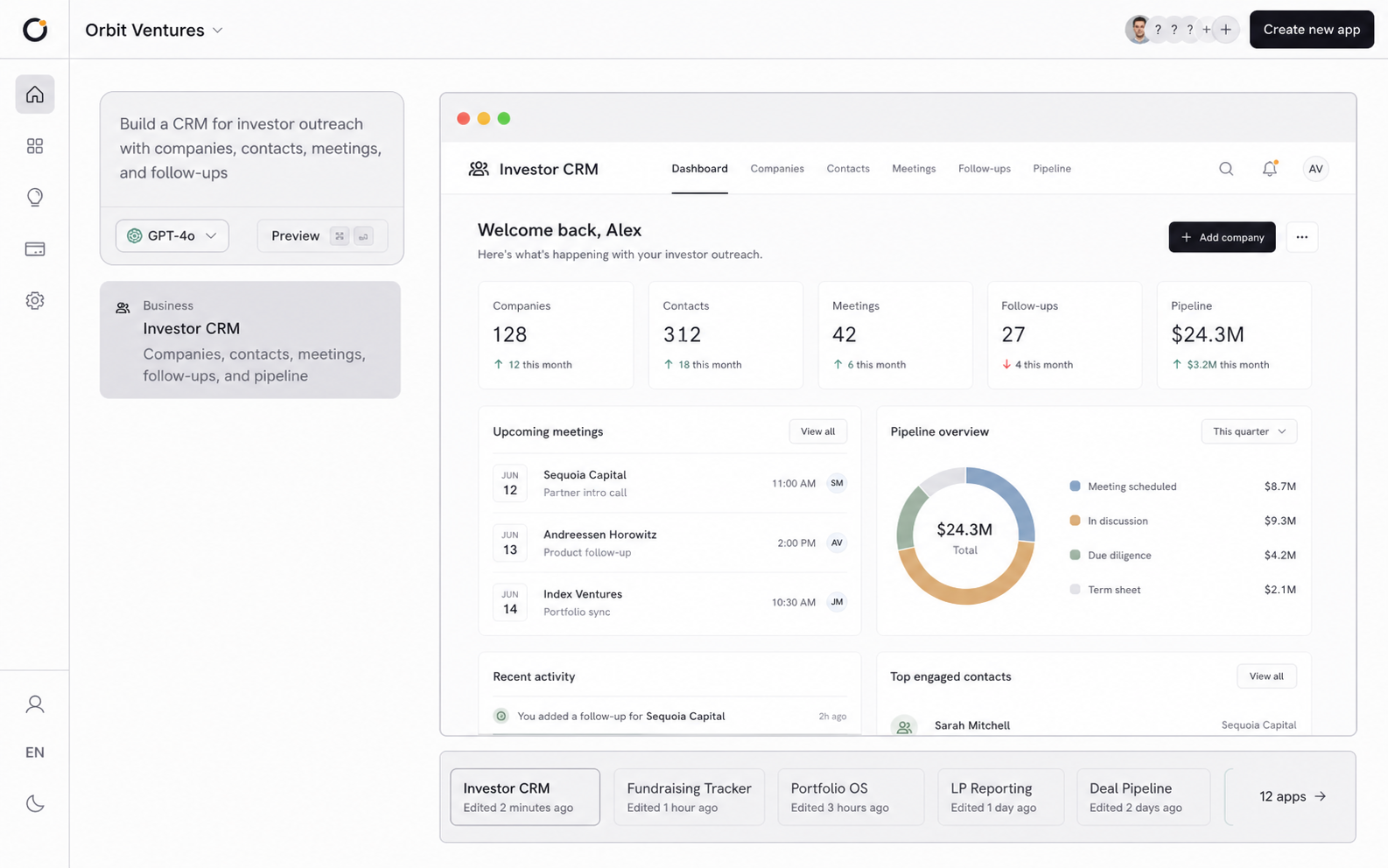
The frozen launch
How to iterate on an MVP.
You iterate on an MVP by changing it, over and over, as you learn. The trouble is what a change costs. On most tools, going back in means fighting the builder or rebuilding from scratch, and one wrong move wipes the data people gave you. So the loop gets too expensive to run, and a launched app quietly freezes. Growth needs a loop cheap enough to run every week.
The change
Point an agent at your app.
Through Orbit, an agent reads your app and makes the change you ask for. You redeploy to take it live.
The data model
Add a field or a table, and the backend follows.
The workflows
Change the logic that runs behind the app.
The screens
Adjust what people see and use.
The loop
A loop that compounds.
Use, learn, change, and round again, on the app you already have.
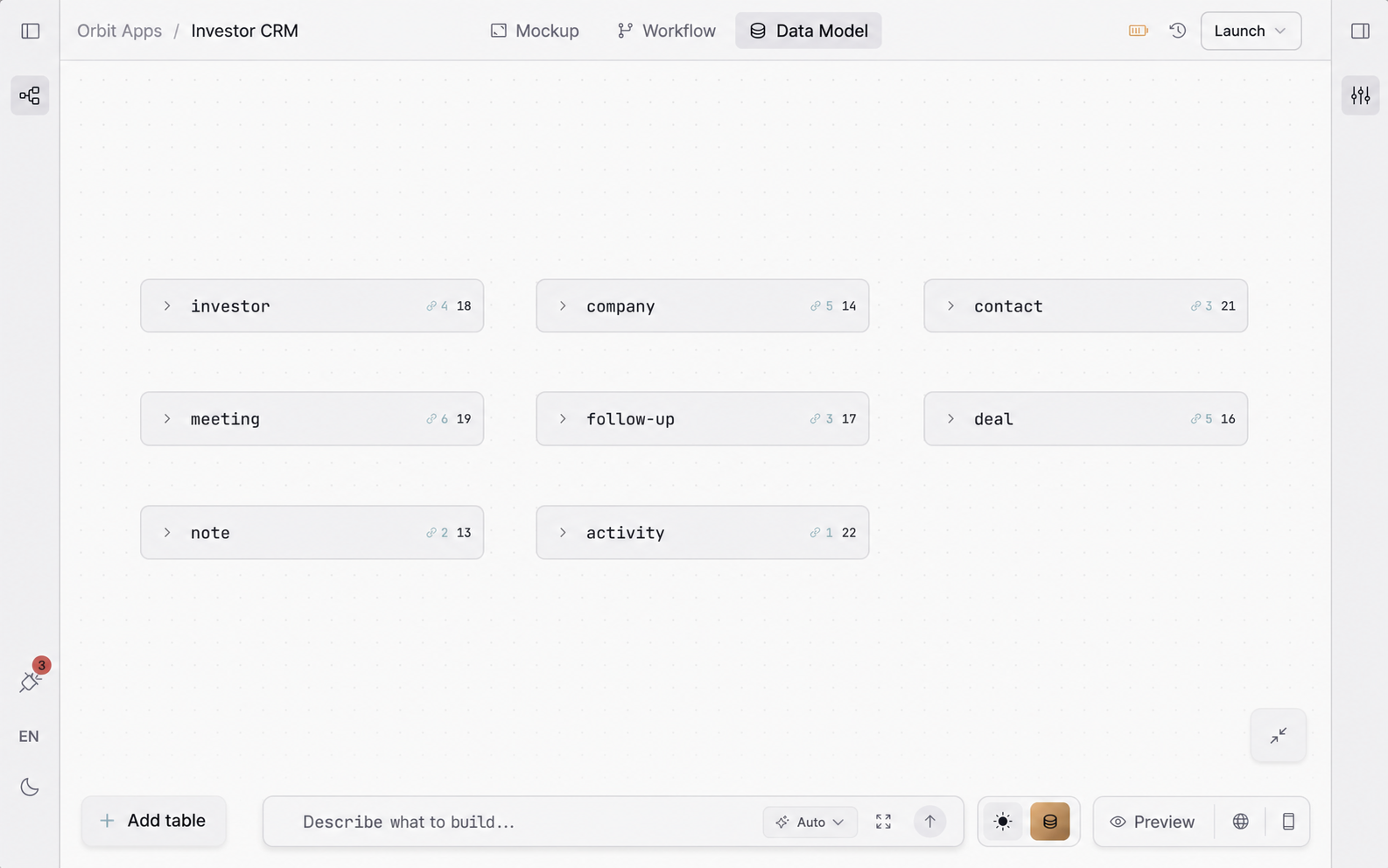
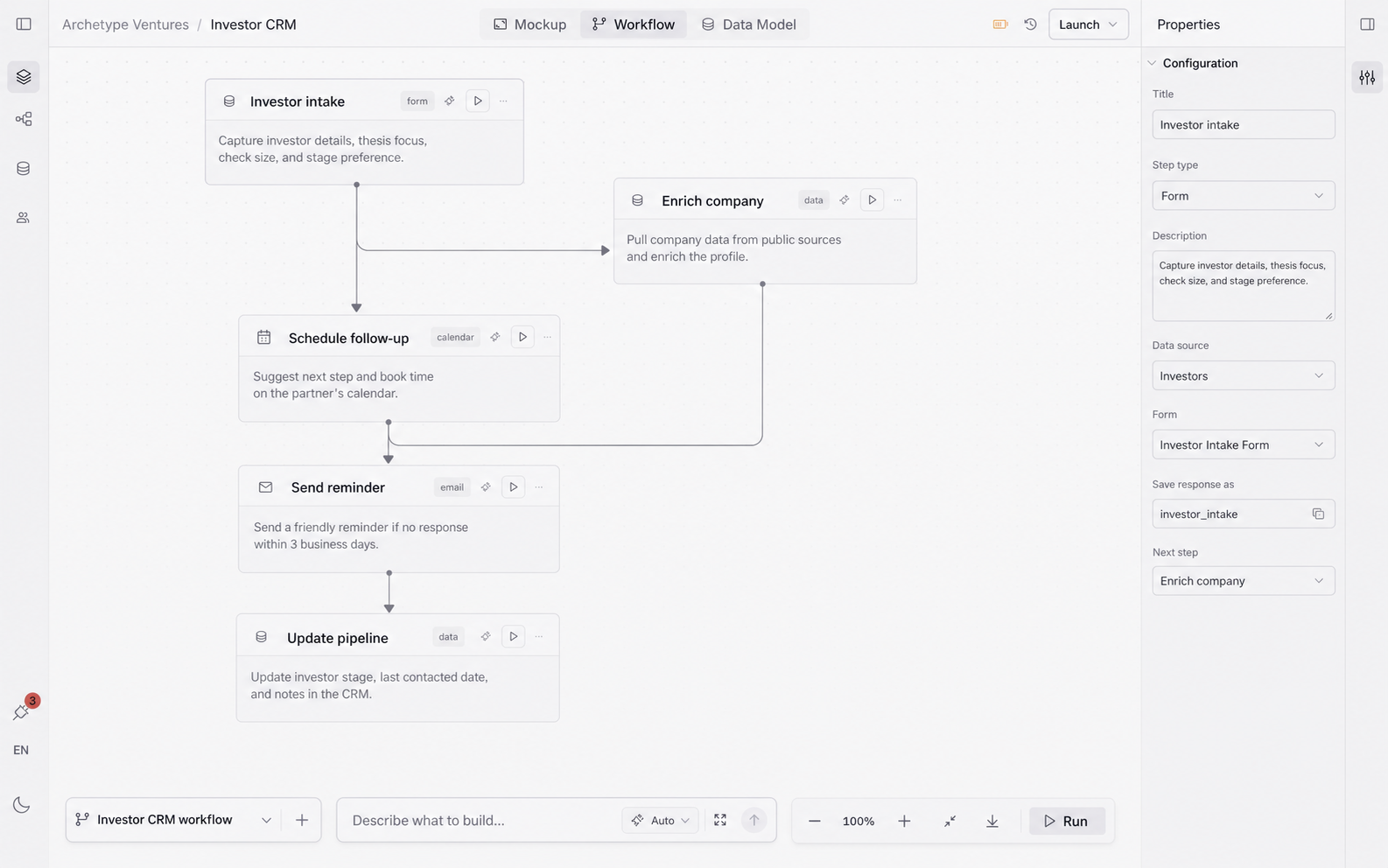
It fills with use.
As people use it, your app fills with their data. That is your information about what is working and what to fix next.
Change it without fear.
Add a field, change a flow, edit a screen, and redeploy. Changes only add, they never overwrite, so your data and the rest of the app stay put. Anything risky waits for your approval.
Every turn keeps the last.
It is the same app on the same data model. A change builds on what is there, it does not start over. That is why the work compounds instead of resetting.
Round again
And the wheel keeps spinning.
Grow feeds the next Explore: what you learned becomes the next thing you look into. Five turns, one app, none of the work thrown away. That is the difference between a loop and a flywheel.
Before you grow
The grow questions.
Can I change the app after it's live?
Yes, as often as you like. Add a field, change a workflow, edit a screen, and redeploy. Changes only add, they never drop, so you keep the data you already have. Anything risky is held for your approval first.
Does Orbit show me analytics on my users?
Not as a dashboard. Your information is your app's own data, the records people create as they use it, which you can read over its API. For product analytics you would add your own tool.
How does an agent change my app?
Through Orbit's connection for agents. The agent reads your app and edits its data model, workflows, or screens, and you redeploy the change. It works on the app's design, so nothing goes live until you deploy.
Do I have to rebuild to make big changes?
No. It is the same app on the same data model, so a change builds on what is there. You edit and redeploy, you do not start over.