Le Flywheel Orbit
Un bon logiciel exige plus d’un prompt.
La première version est un tour. La production exige les suivants, et Orbit est conçu pour cette boucle.
Une idée, un tour complet.
Chaque tour améliore la même app : rien de ce que vous créez n’est jeté.
Sortez l’idée de votre tête.
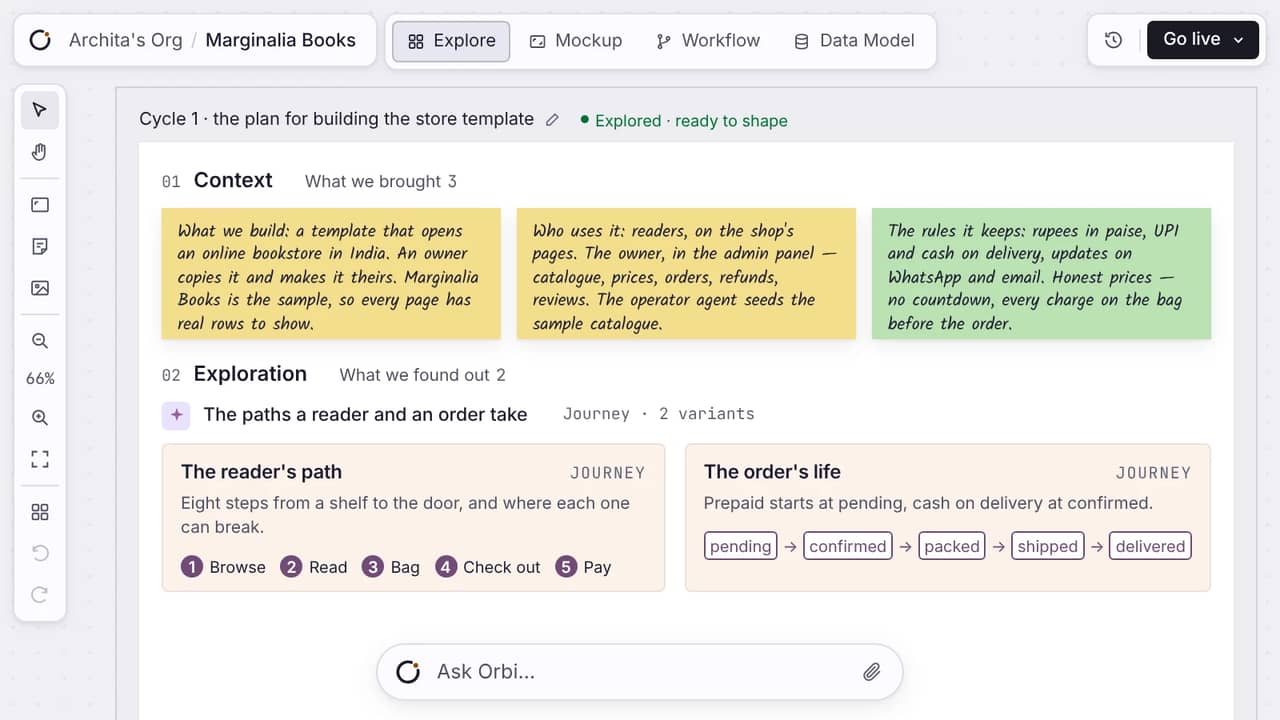
Rassemblez les notes, les liens et les questions ouvertes sur un seul canevas. Cherchez celles auxquelles vous ne savez pas encore répondre. Tout ce dont l’idée est faite tient à un seul endroit, au lieu de rester dans votre tête, où elle demeure floue et change de forme à chaque coup d’œil.
- Vous faites
- Drop the notes, links, screenshots and unanswered questions onto Explore, then wire the cards that belong together.
- Transmet à
- Cadrer reçoit un tas de matière avec les questions ouvertes signalées, et la trace de la provenance de chacune.
Présentez puis cadrez.
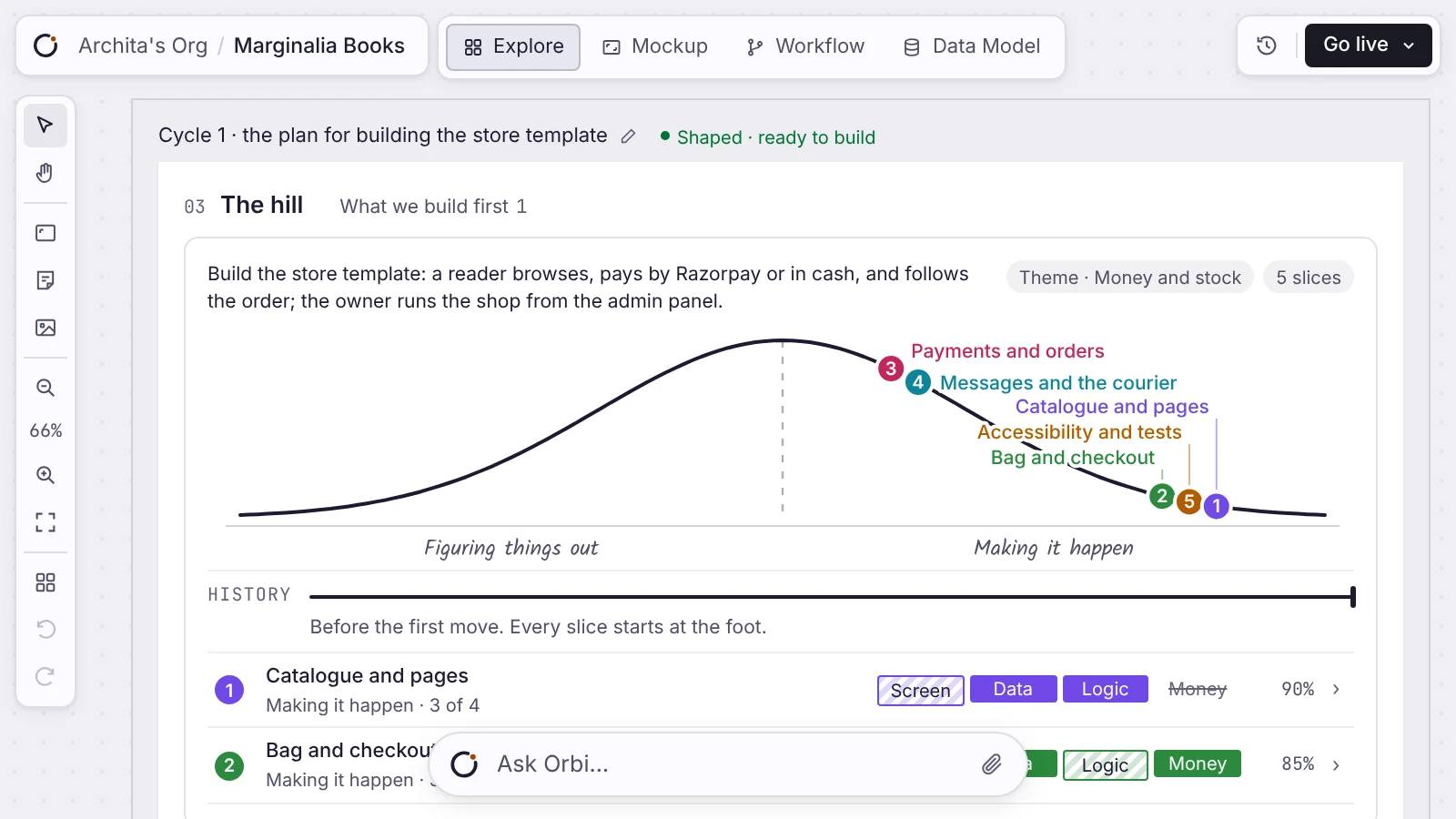
L’idée devient un pitch et un périmètre lisibles : ce qui est créé, dans quel ordre, et ce qui reste ouvert. Vous tranchez pendant que changer d’avis est gratuit. Ici, changer d’avis coûte une phrase. Après le lancement, cela coûte une migration.
- Vous faites
- Écrivez le pitch et le périmètre sur le même tableau que la matière : ce qui est créé, dans quel ordre, et ce que vous ne créez pas.
- Transmet à
- Créer reçoit un ordre de travail, et les décisions que vous avez déjà prises, pour ne pas les rouvrir.
Partez des données.
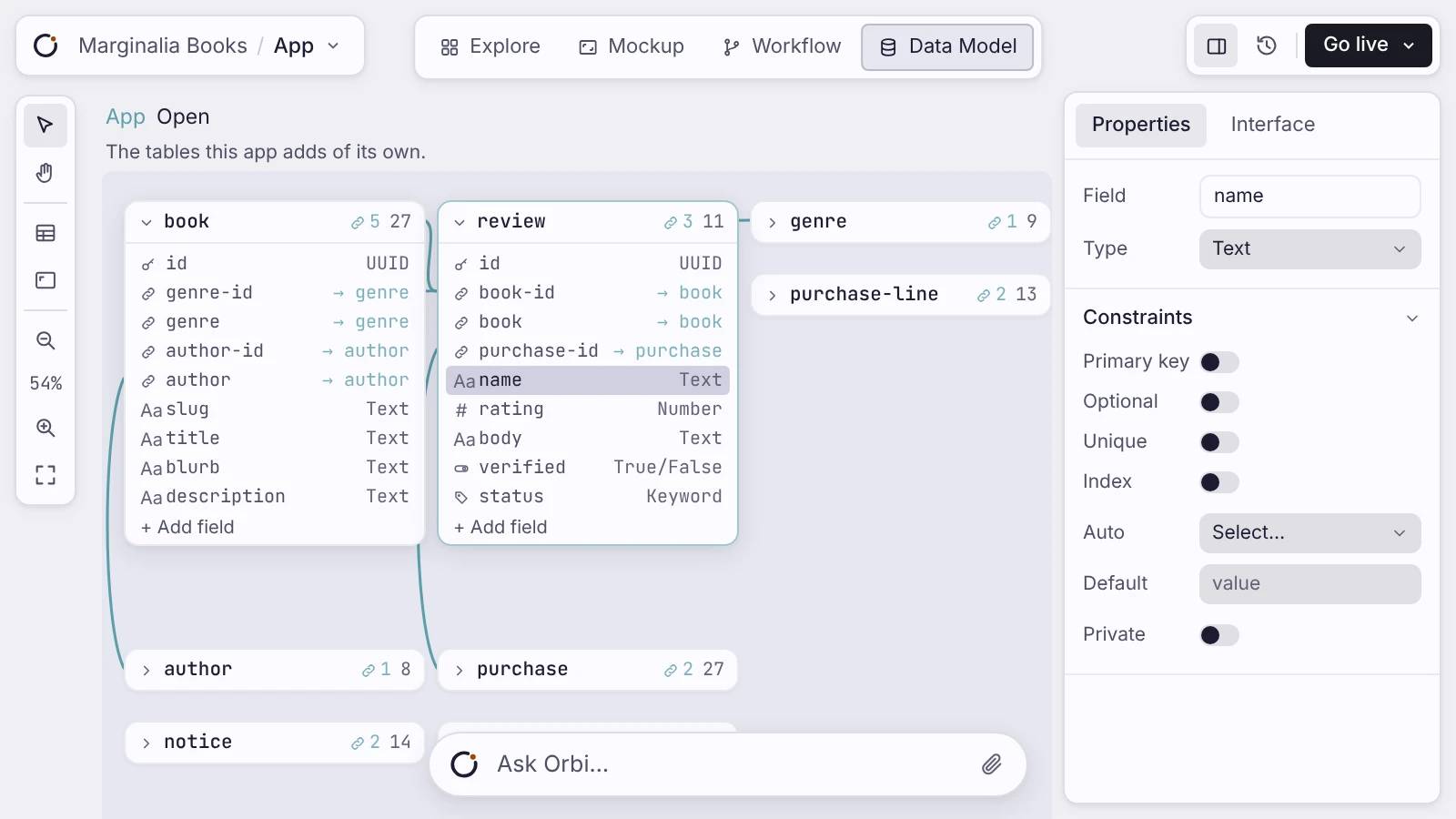
Le Data Model, les Workflows et les écrans montent en couches. Créez les données d’abord et tout ce qui est au-dessus a de quoi tenir. Le Data Model est la seule couche qu’un changement ultérieur ne peut pas contourner : d’où sa place en premier.
- Vous faites
- Dessinez les tables et les champs, reliez la logique qui tourne sur un serveur, puis composez les écrans par-dessus les deux. Chacun est sa propre surface, et vous pouvez rouvrir n’importe laquelle.
- Transmet à
- Lancer reçoit une app qui marche, avec une base Postgres à elle, et des données qui survivent à chaque déploiement suivant.
Rencontrez votre public.
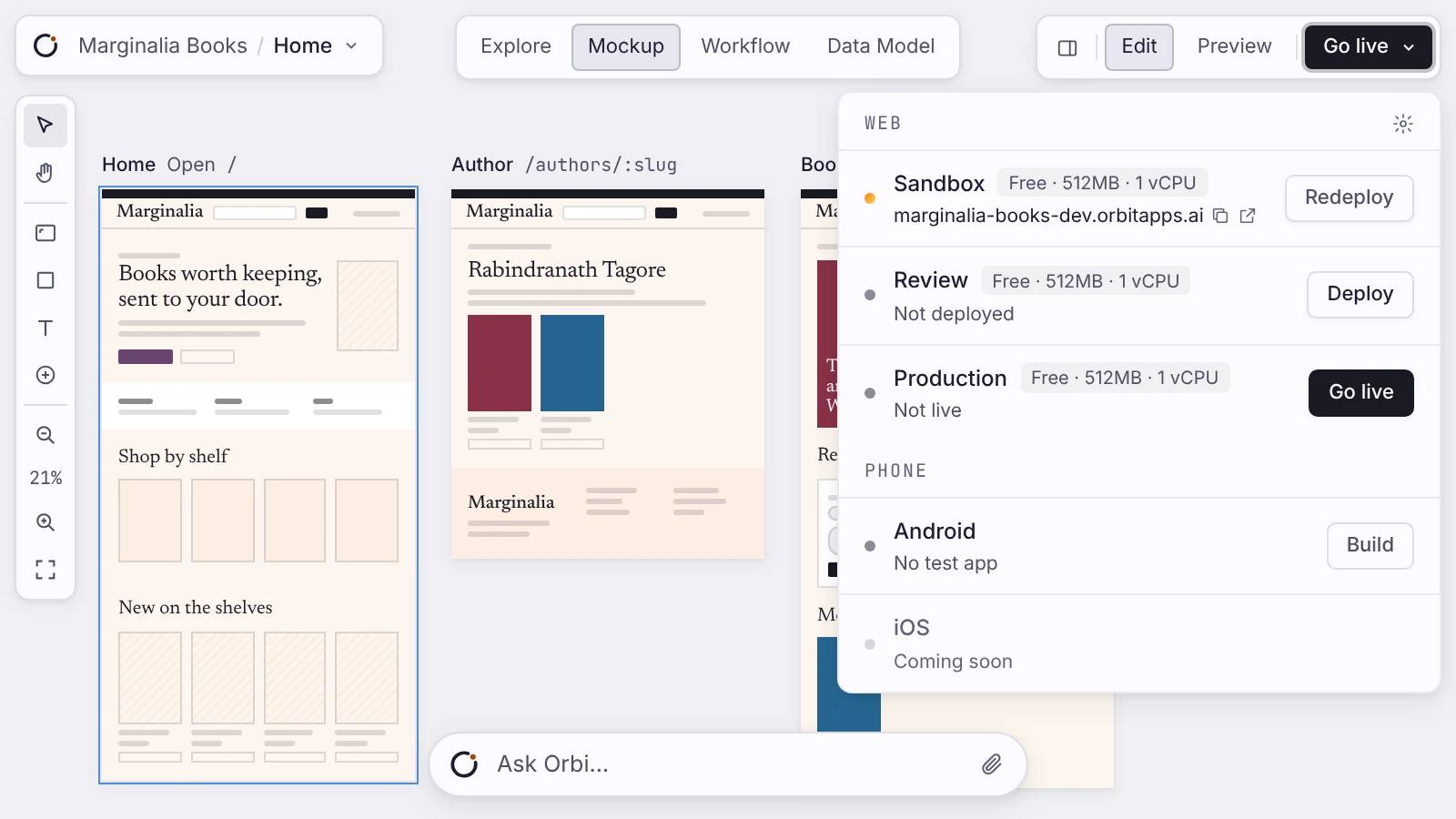
Des inconnus se connectent, enregistrent leur travail et trouvent les recoins que vous n’avez jamais testés. Chacun est une chose à corriger ou à créer ensuite. Un déploiement donne à l’app une URL en HTTPS, une base de données et la connexion. Votre première app en ligne est gratuite.
- Vous faites
- Déployez-la, pointez votre propre domaine dessus, et donnez le lien à quelqu’un qui n’était pas dans la pièce pendant que vous la construisiez.
- Transmet à
- Croître reçoit de vrais comptes et de vraies lignes, plus les recoins jamais testés, trouvés par ceux qui s’en servent.
Réinjectez vos acquis.
Une app en ligne touche des gens qui n’étaient pas là quand vous l’avez créée. Ce qu’ils demandent devient le tour suivant. Vous modifiez la surface et redéployez : ajouter un champ migre tout seul, et un changement qui supprimerait vos données est refusé plutôt qu’exécuté.
- Vous faites
- Lisez ce que les gens ont réellement fait, dans les données mêmes de l’app. Il n’y a pas de tableau de bord d’analyse ici ; les données sont à vous à interroger. Choisissez le seul changement qui répond au plus grand nombre de questions.
- Transmet à
- Explorer reçoit une question qui vaut un tour entier, posée par quelqu’un qui utilise la chose plutôt que par quelqu’un qui l’a imaginée.
Rebelote.
Croître nourrit Explorer, et la roue garde le travail déjà fait. Un prototype vous fait faire un tour. C’est au deuxième tour qu’il vous facture, parce qu’un prototype saute quatre choses et que chacune est porteuse.
- Base de données
- Un vrai Postgres à l’app. Vous lisez comment il est structuré, vous le modifiez, et vos lignes survivent à chaque déploiement.
- Serveur
- Les Workflows sont un graphe de nœuds qui tourne sur un serveur. Un Workflow planifié se déclenche que quelqu’un ait l’app ouverte ou non.
- Comptes
- La connexion en HTTPS sur un domaine qui est le vôtre. Les gens ont des comptes à eux, pas un lien d’aperçu partagé.
- Migrations
- Ajouter un champ migre tout seul. Un changement qui supprimerait vos données est bloqué au lieu d’être exécuté.
Sautez ces quatre-là et le deuxième tour est une reconstruction. Gardez-les et le deuxième tour est une modification.


Le premier tour
Une invite lance le Flywheel.
« Un CRM pour la prospection investisseurs. » De ce seul prompt, vous obtenez une première version, en ligne sur une URL. Vous regardez quelque chose de réel en moins d’une heure, et chacune de vos questions porte désormais sur une chose qui existe.
Pas besoin d’avoir tout prévu.
Vous avez une idée et une pile de questions. C’est exactement là que la boucle commence. Décrivez-la, mettez une première version en ligne, et laissez les questions devenir des modifications.