Créez une API depuis vos données.
Créez les tables dont votre app a besoin et une API vient avec elles, derrière la connexion que votre app utilise déjà.
Le Data Model Billing Ops se relie aux endpoints d’API REST générés et à un schéma OpenAPI.
Mode d’emploi
Une API depuis votre schéma, limitée par défaut.
The API is off until you turn it on. Turn it on for a table and you get REST routes, MCP tools and an OpenAPI file. Each request checks who is signed in.
Un endpoint REST pour chaque entité
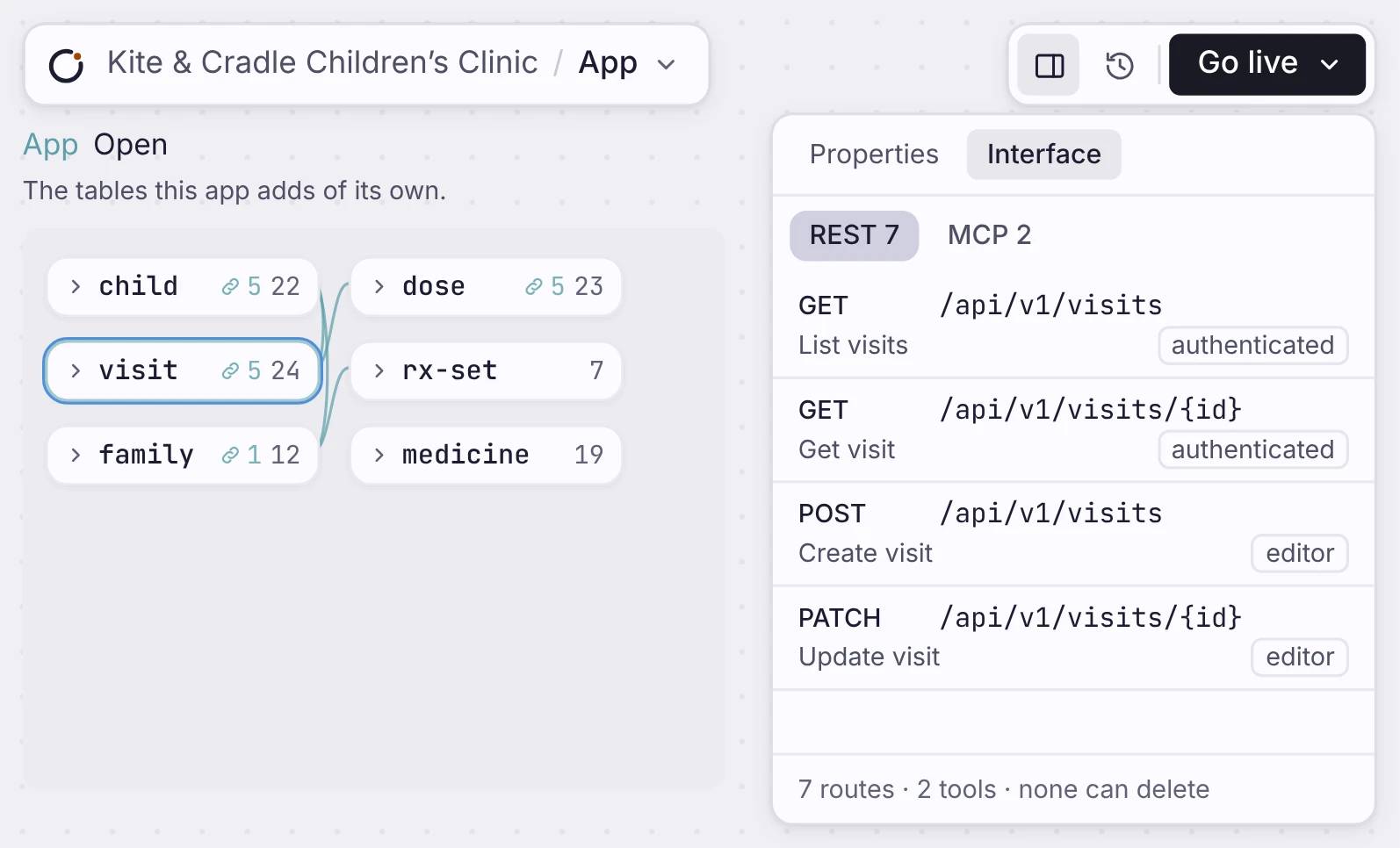
Définissez une table et elle obtient des routes GET, POST, PATCH et DELETE.
Un schéma OpenAPI en direct, toujours synchronisé
Votre app publie un fichier OpenAPI 3.0 généré depuis le même schéma que vos routes d’API.
Limitée et sécurisée par défaut.
Chaque requête vérifie d’abord l’utilisateur connecté et filtre les résultats aux données autorisées.
Routes for the tables you choose
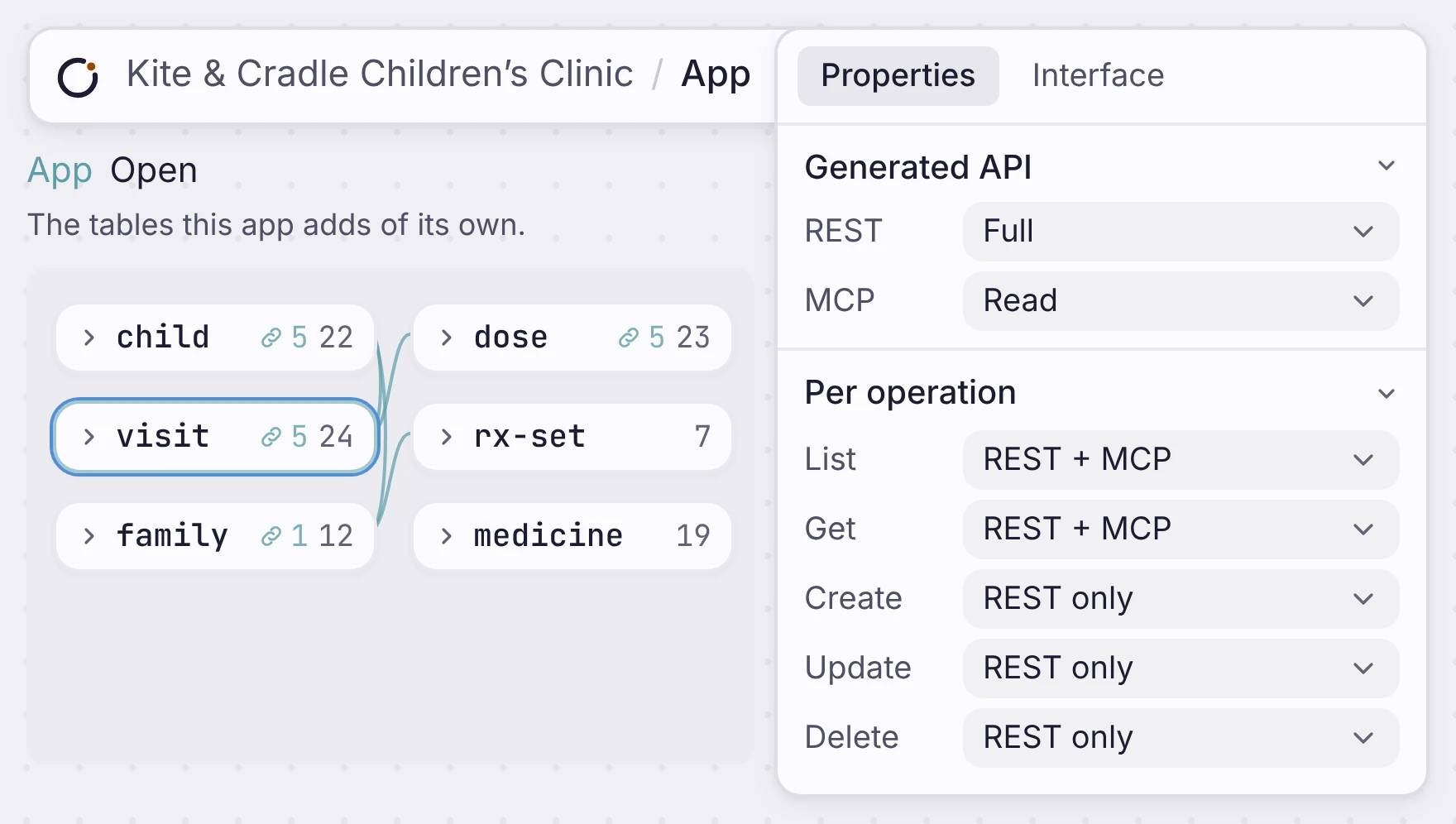
Open a table and set its Generated API. Choose Off, Read, Read and write, or Full, for REST and for MCP. You can also set each action on its own, such as create over REST only, or delete not at all.
Un endpoint REST pour chaque entité
Définissez une table et elle obtient des routes GET, POST, PATCH et DELETE.
REST for code, MCP for agents
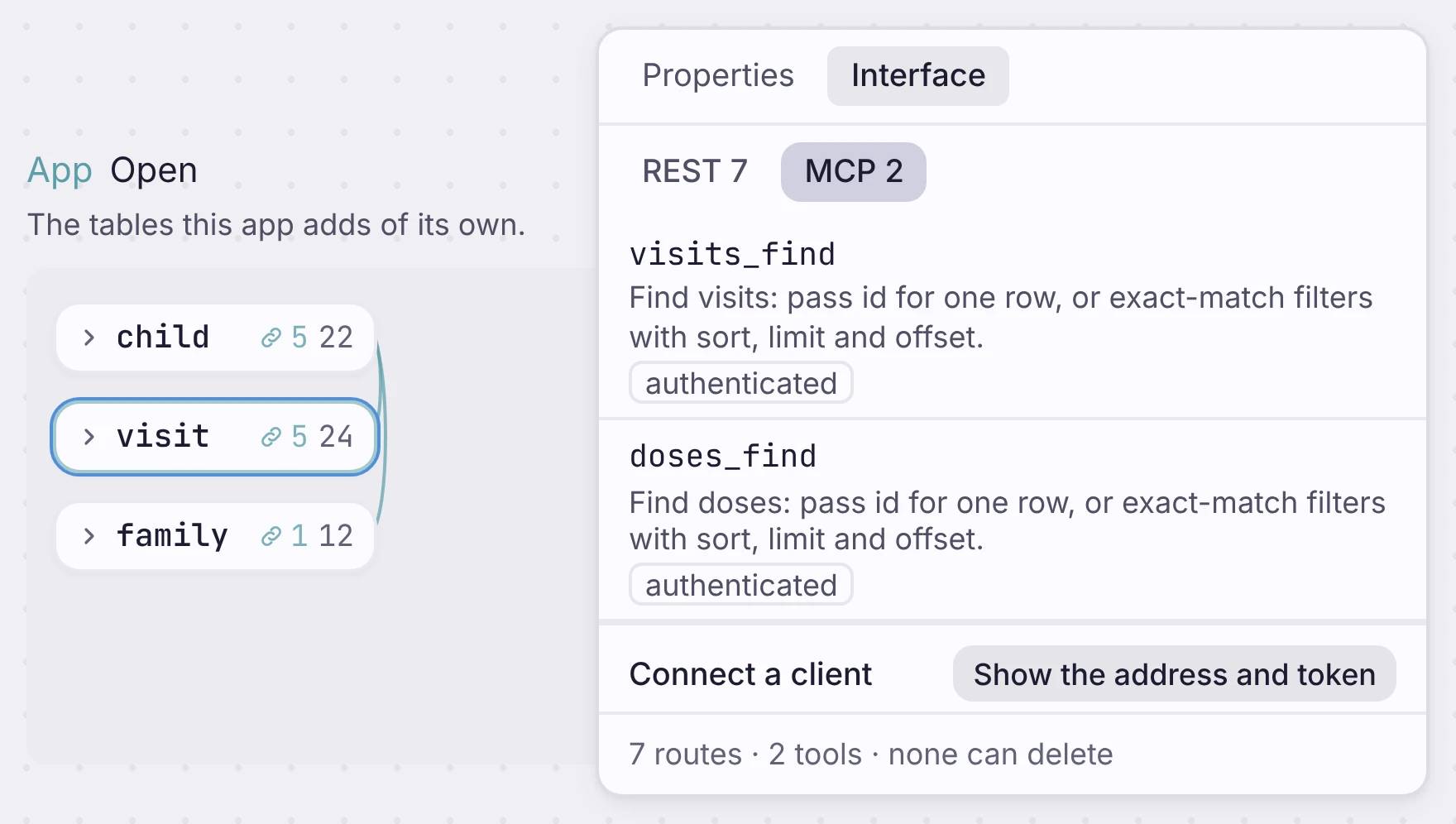
The Interface tab shows what your app serves: every REST route, every MCP tool, and who can call each one. The footer counts them and tells you how many tools can delete. Your app also publishes an OpenAPI file at /openapi.json, and every deploy updates it.
Un schéma OpenAPI en direct, toujours synchronisé
Votre app publie un fichier OpenAPI 3.0 généré depuis le même schéma que vos routes d’API.
Limitée et sécurisée par défaut.
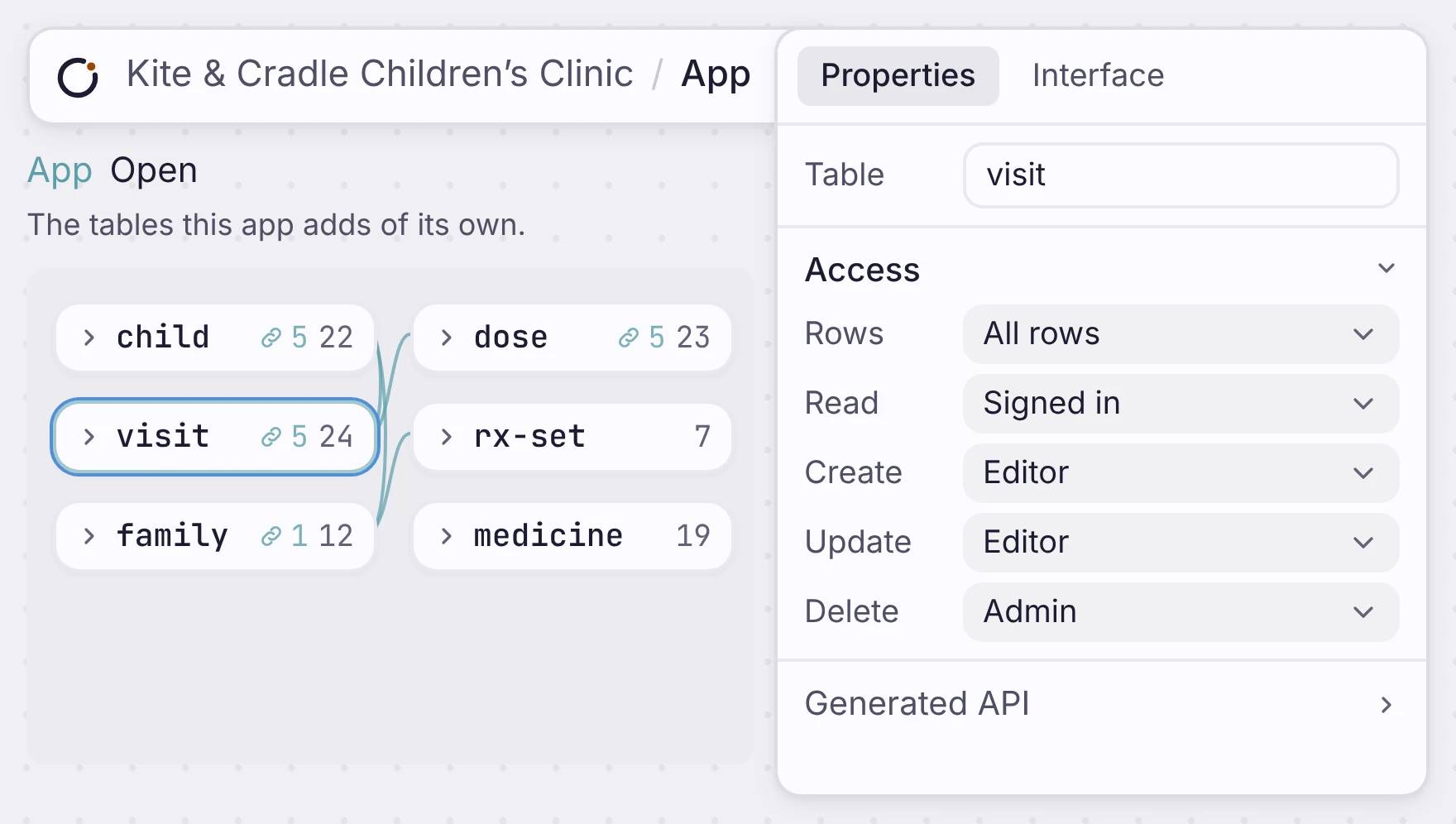
Each request checks who is signed in before it touches data. For each table, set who can read, create, update and delete. The levels are Anyone (read only), Signed in, Viewer, Editor, Admin and Owner. You can also limit reads to each person’s own rows.
Limitée et sécurisée par défaut.
Chaque requête vérifie d’abord l’utilisateur connecté et filtre les résultats aux données autorisées.
Où cela s’inscrit
The API comes from your data.
Vous ne créez pas l’API séparément. Elle vient de votre Data Model : quand votre schéma change, l’API change avec lui.
Get an API without writing one
Définissez votre Data Model et obtenez une API documentée, limitée à vos utilisateurs dès le départ.