Connectez les agents à votre app.
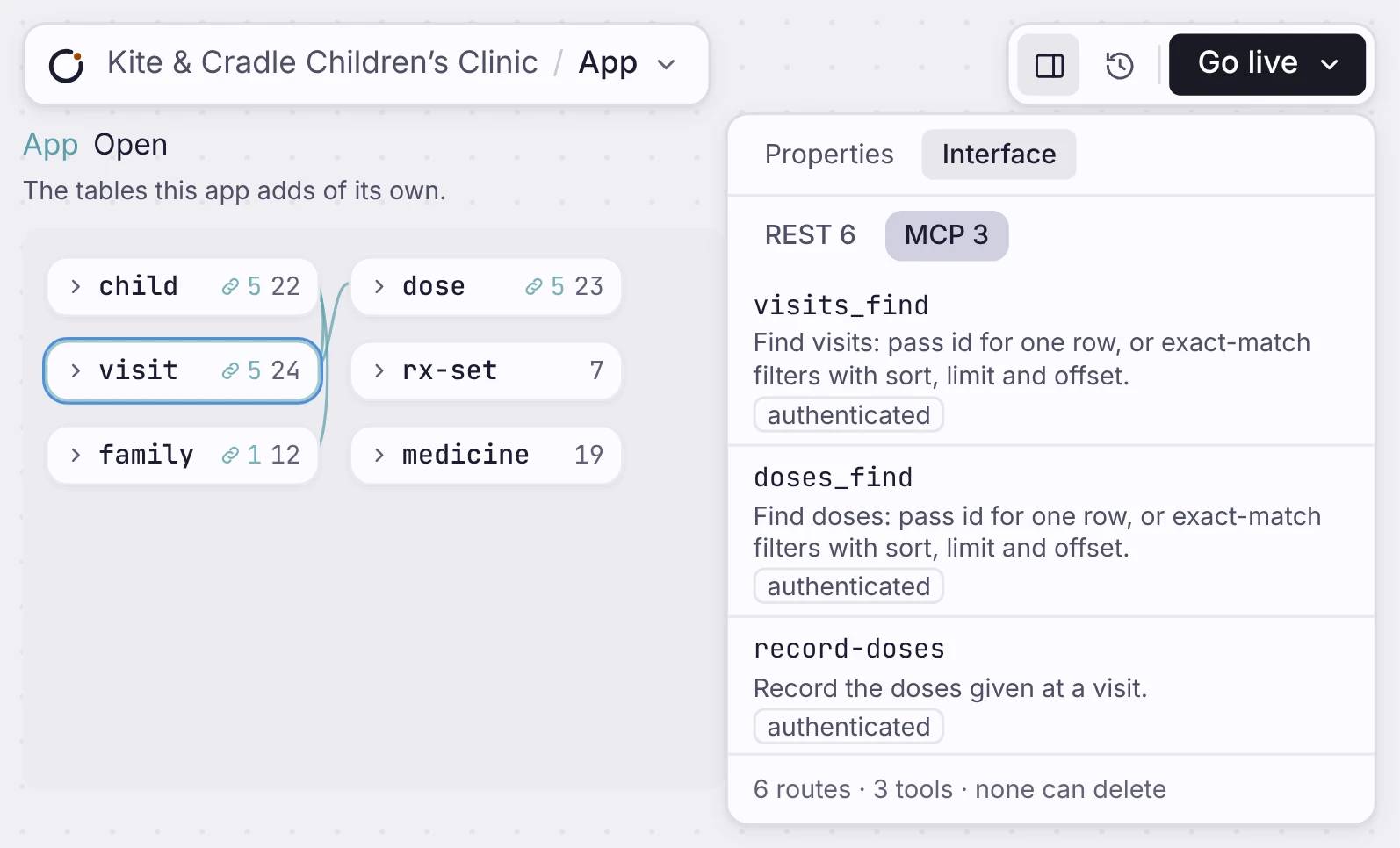
Your app can be an MCP server. Claude and other agents can find records, add them and run your workflows. You decide which tables and workflows they can use and each call follows your access rules.
Les entités et Workflows Billing Ops deviennent des outils MCP pour les agents.
Mode d’emploi
Pick what agents can use.
Nothing is open to agents until you turn it on. Turn on MCP for a table and agents can find, add or change its rows. Offer a workflow and agents can run it. Your app serves all of it at /mcp.
REST plus OpenAPI, l’interface que lisent les agents
Votre Data Model crée une API REST et un schéma OpenAPI 3.0 sur /openapi.json.
Un llms.txt pour que les moteurs de réponse trouvent votre app
Chaque app publie un fichier llms.txt pour que les LLM et les moteurs de réponse comprennent votre app.
Un serveur MCP construit depuis votre app.
Vos Workflows et entités deviennent des outils MCP, avec authentification par jeton et portée de l’utilisateur connecté.
A workflow as a tool
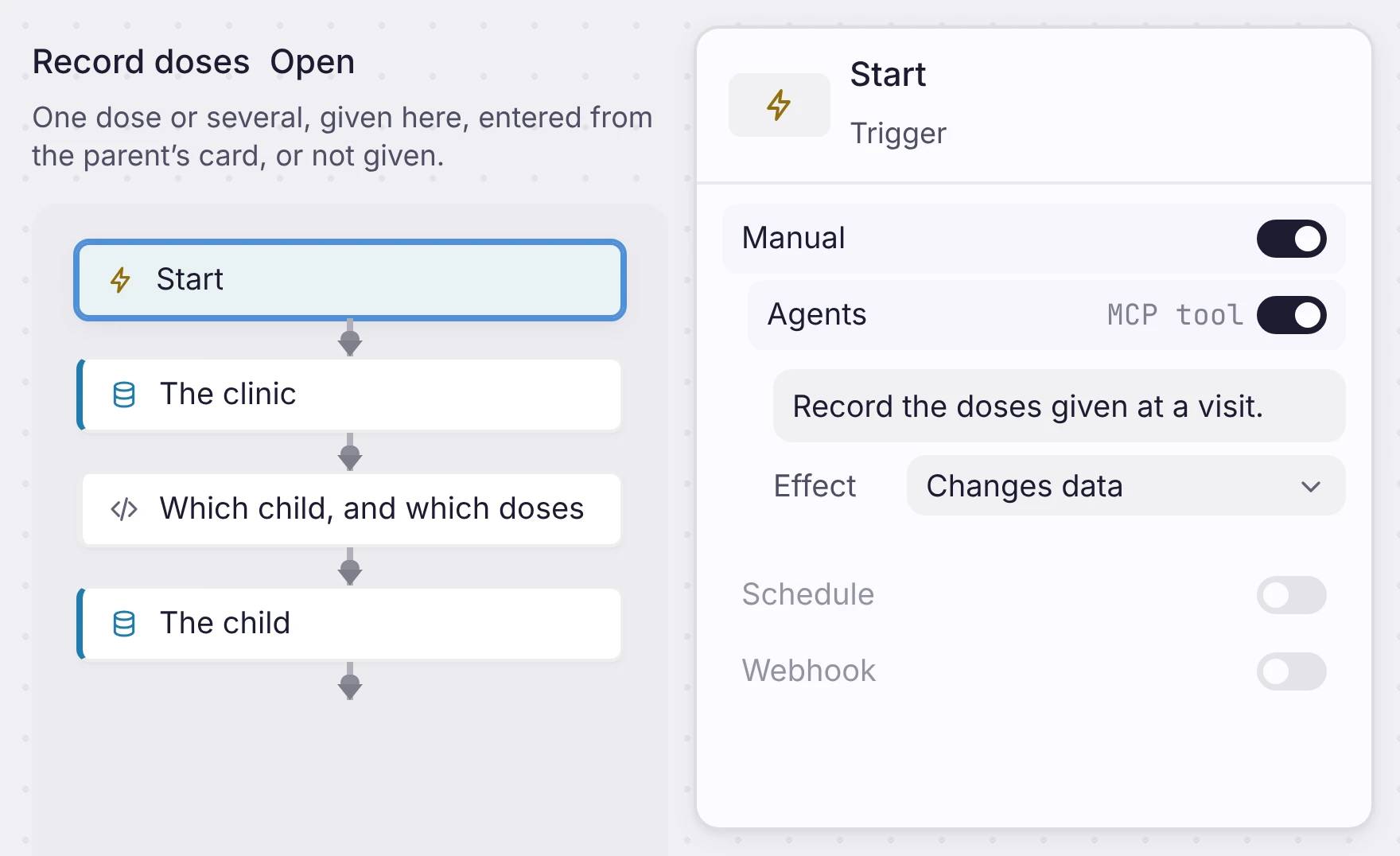
Open a workflow and select its Start step. Under Manual, switch on Agents. Write one line about what the workflow does, because an agent reads it to pick the right tool. Then set the Effect: Only reads data, Changes data, or Can delete data.
REST plus OpenAPI, l’interface que lisent les agents
Votre Data Model crée une API REST et un schéma OpenAPI 3.0 sur /openapi.json.
Connect Claude or any client
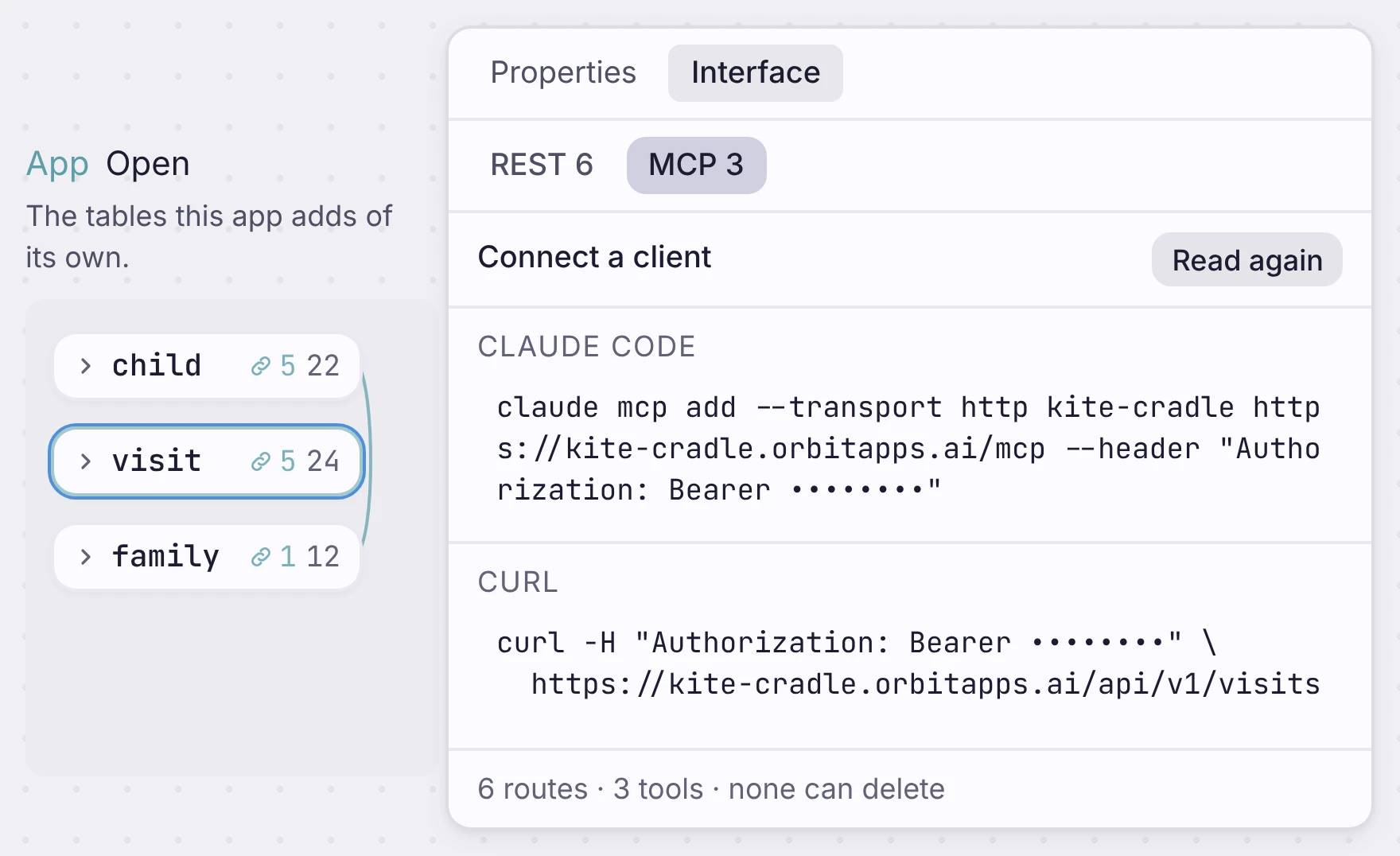
Open the Interface tab and click “Show the address and token”. You get lines to copy for Claude Code, a config file, the MCP Inspector and curl. Paste one, and the agent sees your tools.
Un llms.txt pour que les moteurs de réponse trouvent votre app
Chaque app publie un fichier llms.txt pour que les LLM et les moteurs de réponse comprennent votre app.
Safe by default
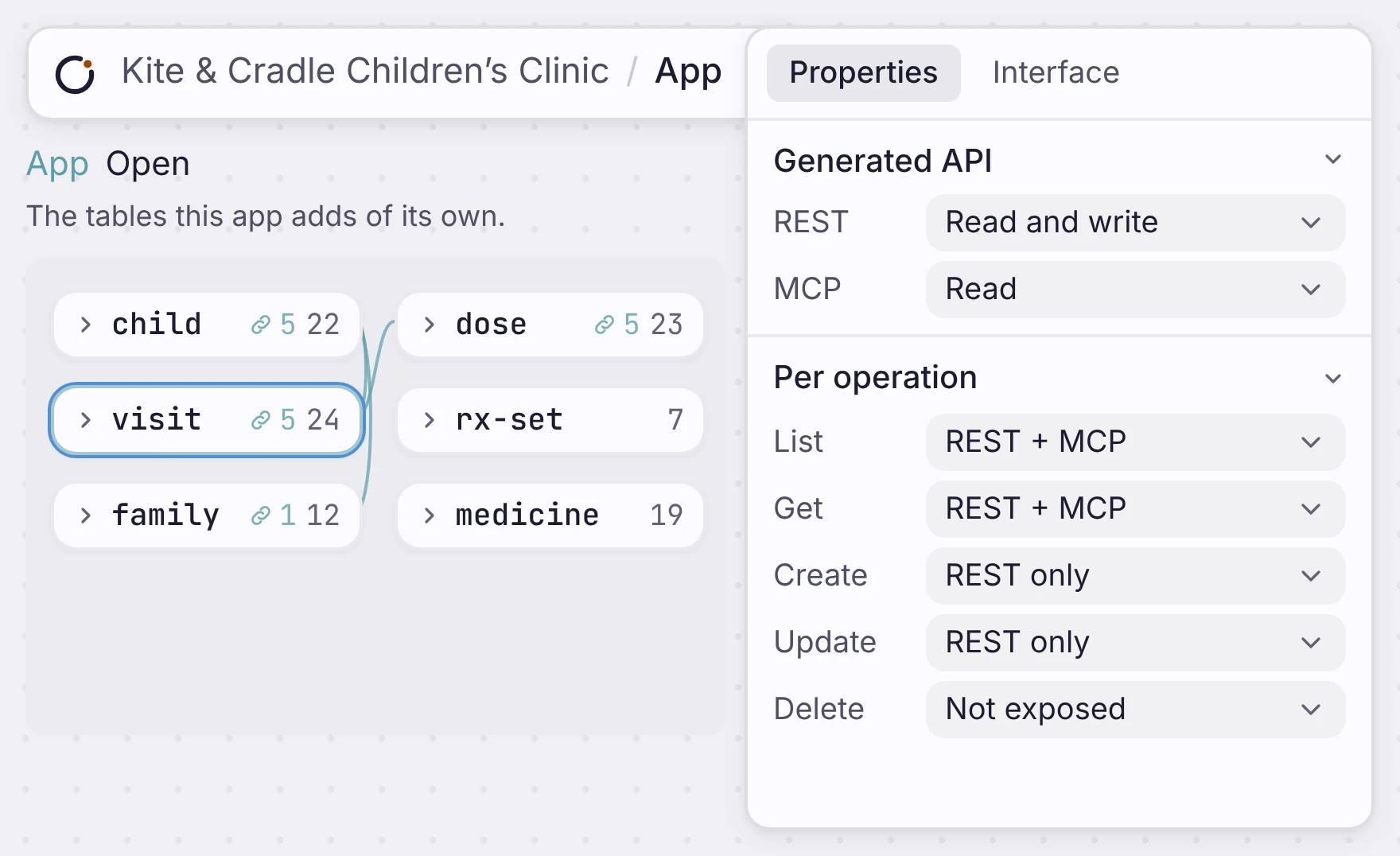
Each table’s MCP setting starts off. Set it to Read, Read and write, or Full, or set each action on its own. For example, let agents find visits but not change them, and never let them delete. Tools follow the same access rules as your REST API.
Un serveur MCP construit depuis votre app.
Vos Workflows et entités deviennent des outils MCP, avec authentification par jeton et portée de l’utilisateur connecté.
Où cela s’inscrit
One app. People, code and agents use the same data.
Your screens, your REST API and your MCP tools all read the same tables. Change a table and deploy, and all three change with it.
Build an app that agents can use
Build it, choose what agents can do, and connect them with a token.