Créez une app web avec le backend inclus.
Someone signs in, works for an hour, and closes the tab. A week later, every record is where they left it. That needs a database, sign-in and logic on a server. Your app gets all three.
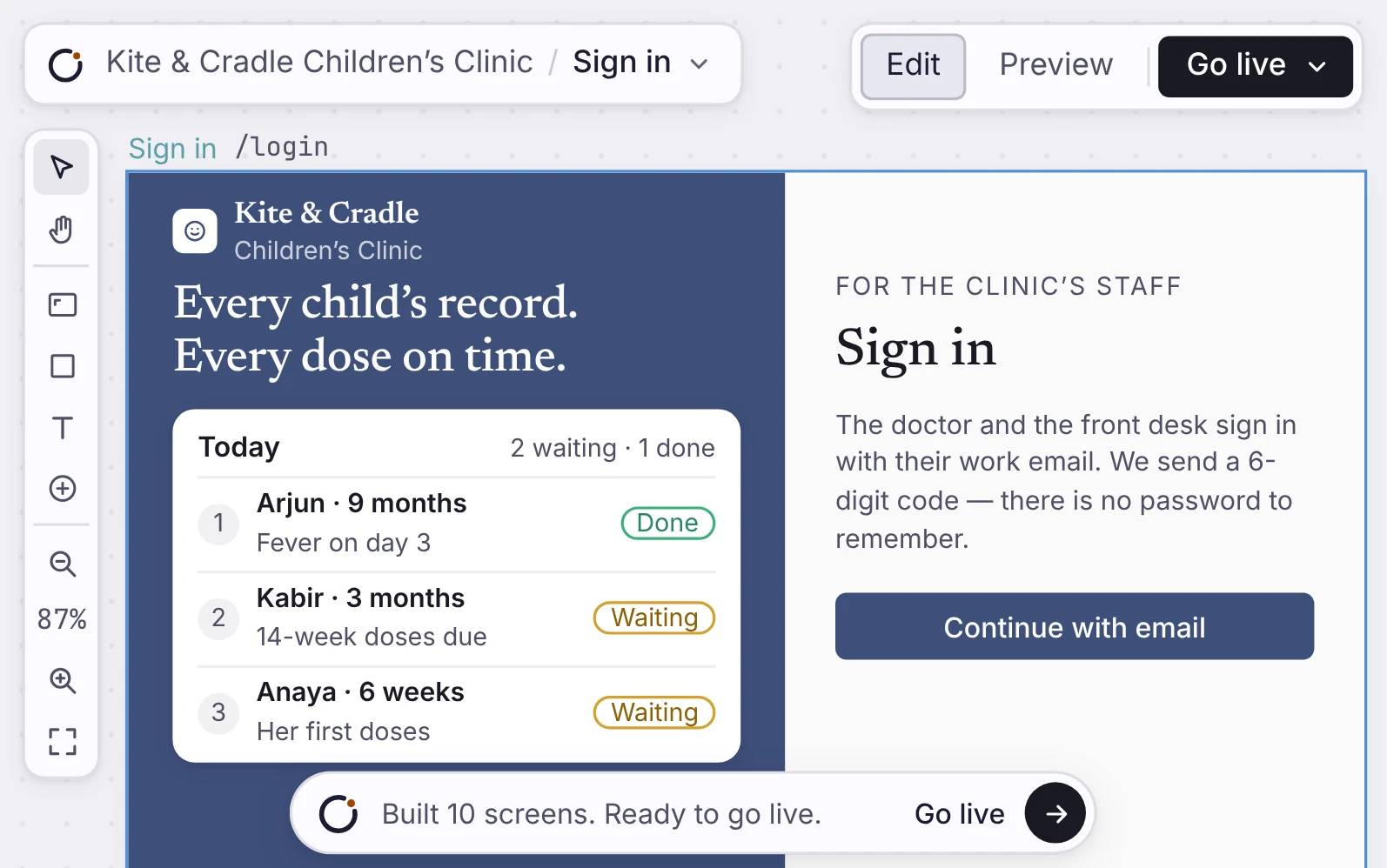
Une app web complète créée avec Orbit, avec le panneau de lancement sur Prod, l’app en ligne sur dealroom.orbitapps.ai et la page Pipeline sélectionnée.
Mode d’emploi
Votre app vient avec toute la pile.
Each app gets its own Postgres database. Your pages, sign-in, workflows and API all use the same tables. You do not connect anything later.
La connexion et une base Postgres
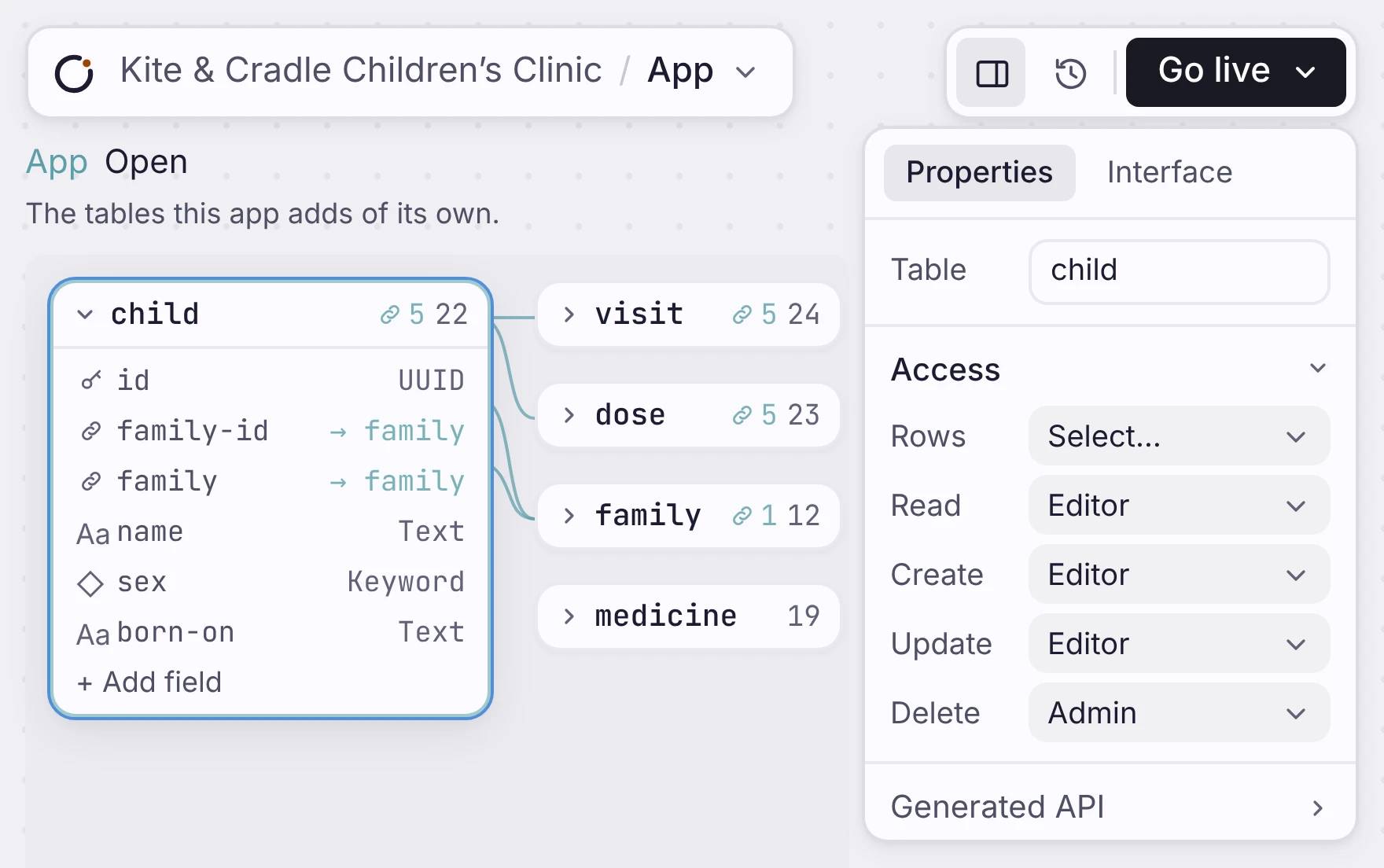
Le Data Model de l’app Dealroom, montré en nœuds d’entités Orbit pour la base de données backend.
Logique serveur et mises à jour en direct
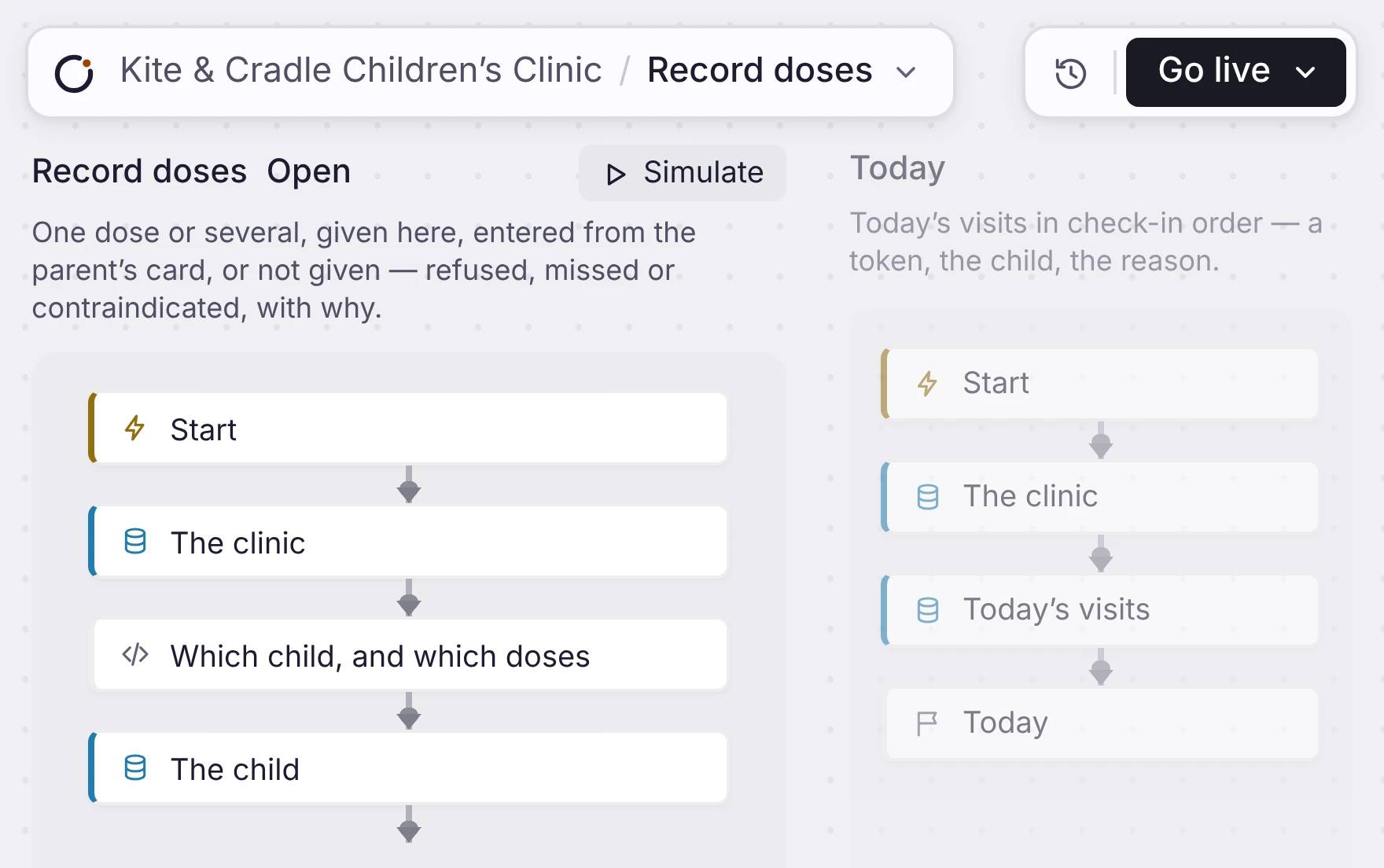
Le canevas de Workflow Dealroom, montrant les actions backend reliées en logique d’app vivante.
Une API pour la même app
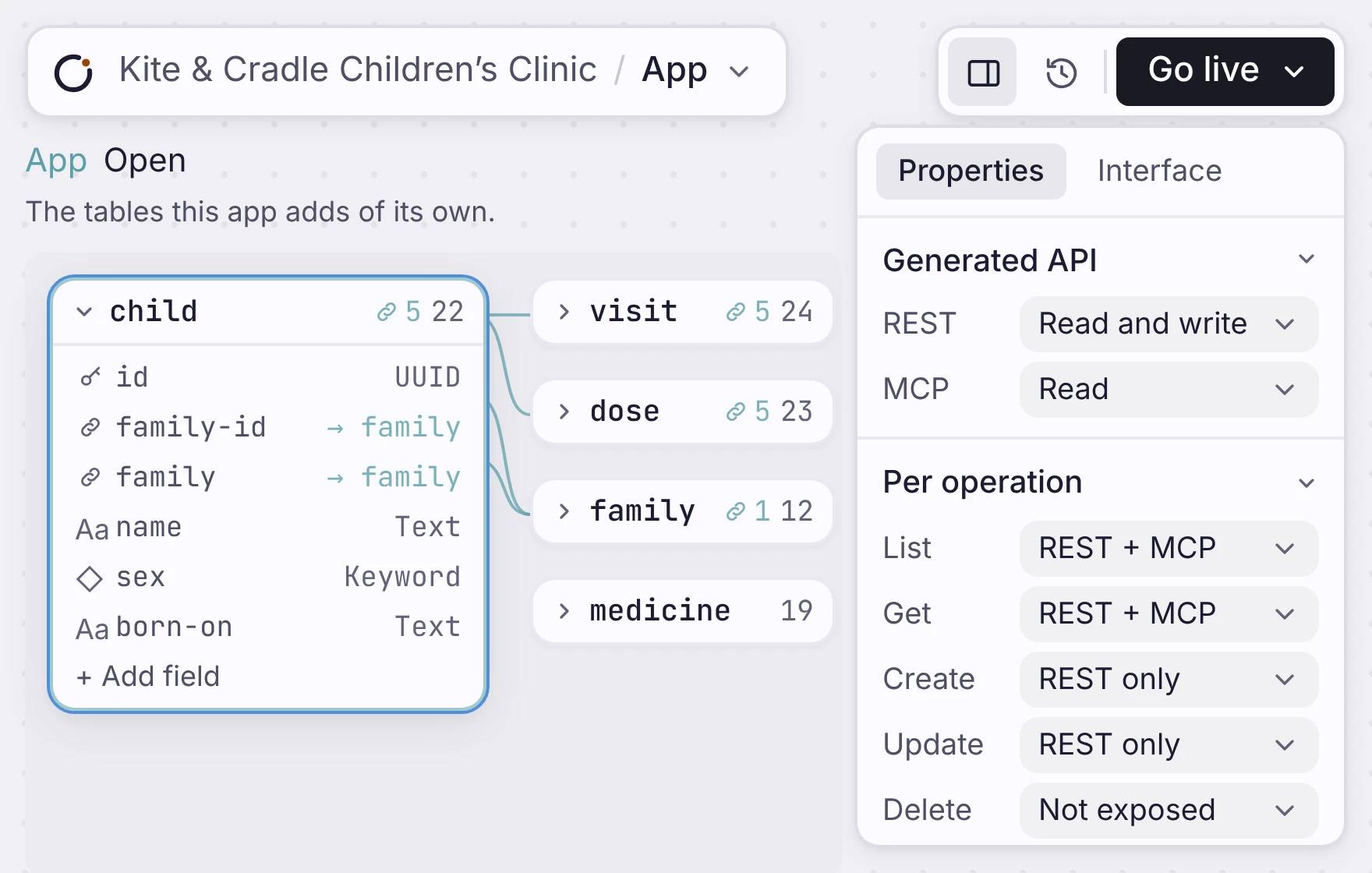
L’écran de l’app Dealroom et la réponse de l’API REST utilisant les mêmes données backend.
La connexion et une base Postgres
Users can log in, stay logged in and save their data. Each user only sees the data they are allowed to access.
Each table you add is a real Postgres table. Every field has a type, and a row with the wrong data is refused. Switch on Google or email sign-in, and the database itself decides which rows each person can read.
Comment fonctionne le Data ModelLa connexion et une base Postgres
Le Data Model de l’app Dealroom, montré en nœuds d’entités Orbit pour la base de données backend.
Logique serveur et mises à jour en direct
Les Workflows tournent en arrière-plan et mettent à jour les données de votre app. Quand les données changent, les tableaux de bord et les files se mettent à jour tout seuls, sans recharger la page.
Un Workflow tourne dans votre app déployée, à heure fixe ou à la demande, votre navigateur fermé. Il peut envoyer via Gmail ou Resend, écrire dans GitHub ou Linear, ou confier une étape à Claude ou GPT. Une étape en échec est réessayée depuis une file durable, jusqu’à vingt fois.
De quoi un Workflow est faitLogique serveur et mises à jour en direct
Le canevas de Workflow Dealroom, montrant les actions backend reliées en logique d’app vivante.
Une API pour la même app
Le Data Model de votre app crée aussi une API REST. Vos écrans et vos intégrations utilisent donc les mêmes données et restent synchronisés.
The API is off until you turn it on. For each table, choose Read, Read and write, or Full, over REST, MCP or both. You can also set each action on its own. For example, list over REST and MCP, create over REST only, and delete not at all.
One limit: the API acts as the person who is signed in. It is the API behind your app, not a public API with keys.
Voir l’API généréeUne API pour la même app
L’écran de l’app Dealroom et la réponse de l’API REST utilisant les mêmes données backend.
Où cela s’inscrit
Une app web, toute la pile.
Tout part ensemble : écrans, base de données, Workflows, connexion et API. Vous créez une app complète au lieu de relier des morceaux plus tard.
Build the app and its backend together
Décrivez ce que vos utilisateurs doivent faire, puis composez les écrans, la connexion, la base de données et la logique en une seule app qui marche.