EXPLORE
Shape the idea
Your notes, what the exploration found, and a hill of what to build first. You pick the order.
01 / 05
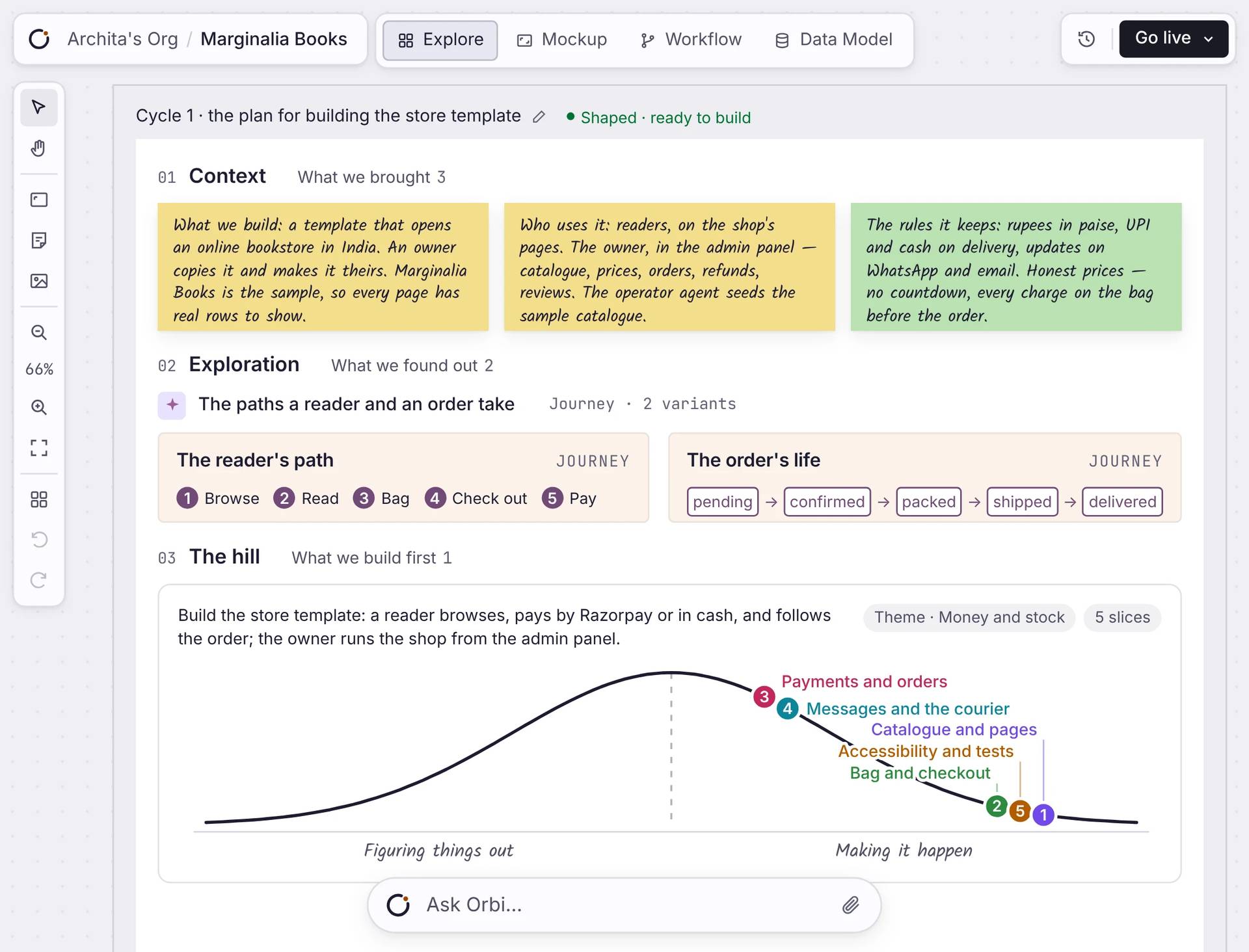
Vous apportez l’idée. Vous créez le produit, le posez sur votre propre domaine, et le faites grandir de là.
Par défaut · tous les écrans
Créez-la avec l’abonnement Claude ou ChatGPT que vous payez déjà. Je n’ajoute rien par-dessus, et la première app reste en ligne gratuitement.
Apportez la vôtre et pointez-la sur l’app gratuite. Ajouter un domaine n’est pas une option payante — HTTPS et connexion arrivent câblés.
Elles sont dans une base que rien d’autre ne partage. Pas quelques lignes dans la table de quelqu’un d’autre.
Les éléments à créer dans
Ouvrez-en une, changez-la, et le reste suit.
Your notes, what the exploration found, and a hill of what to build first. You pick the order.
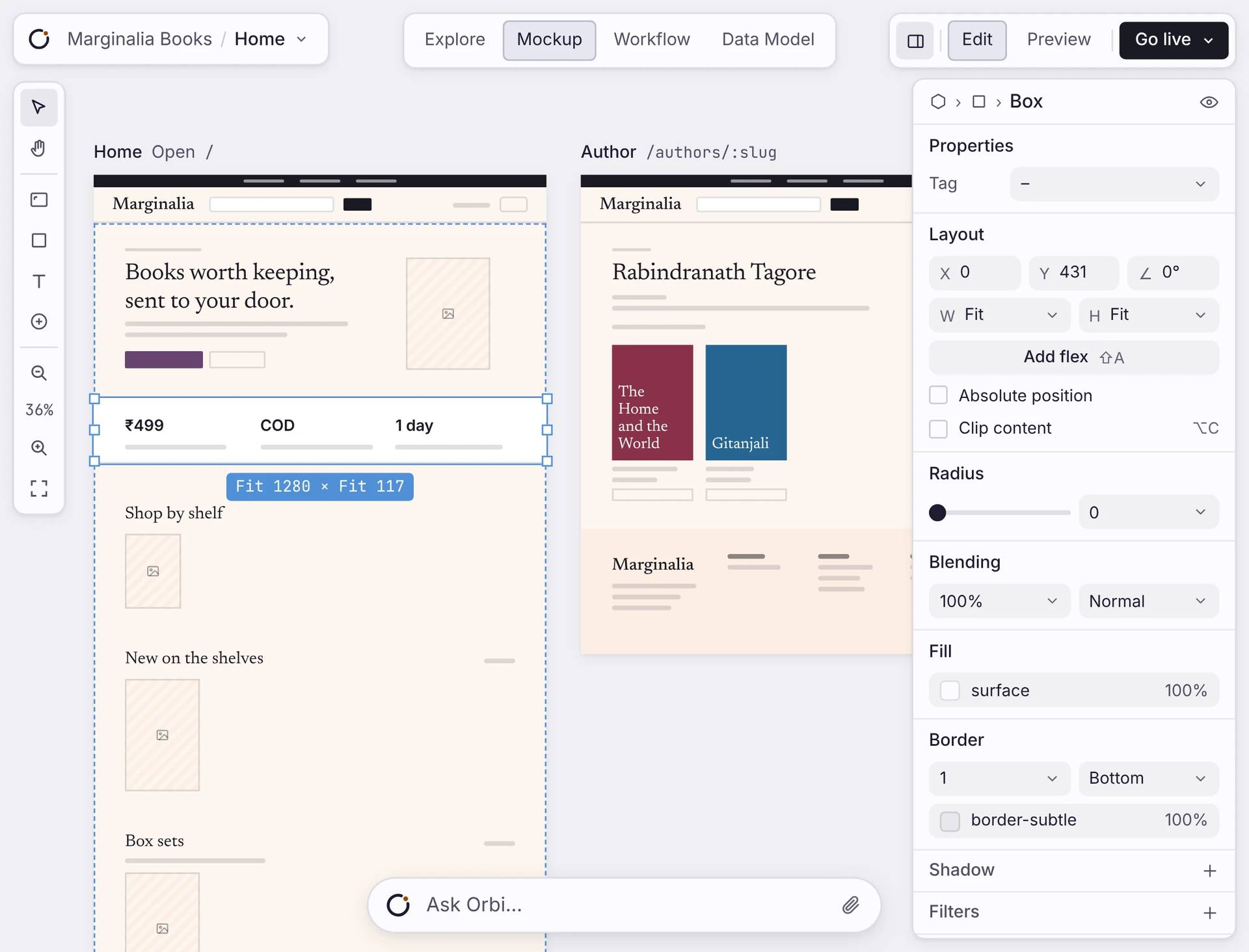
Every page side by side, wired to your data. Select any part and set it exactly. What you edit is what ships.
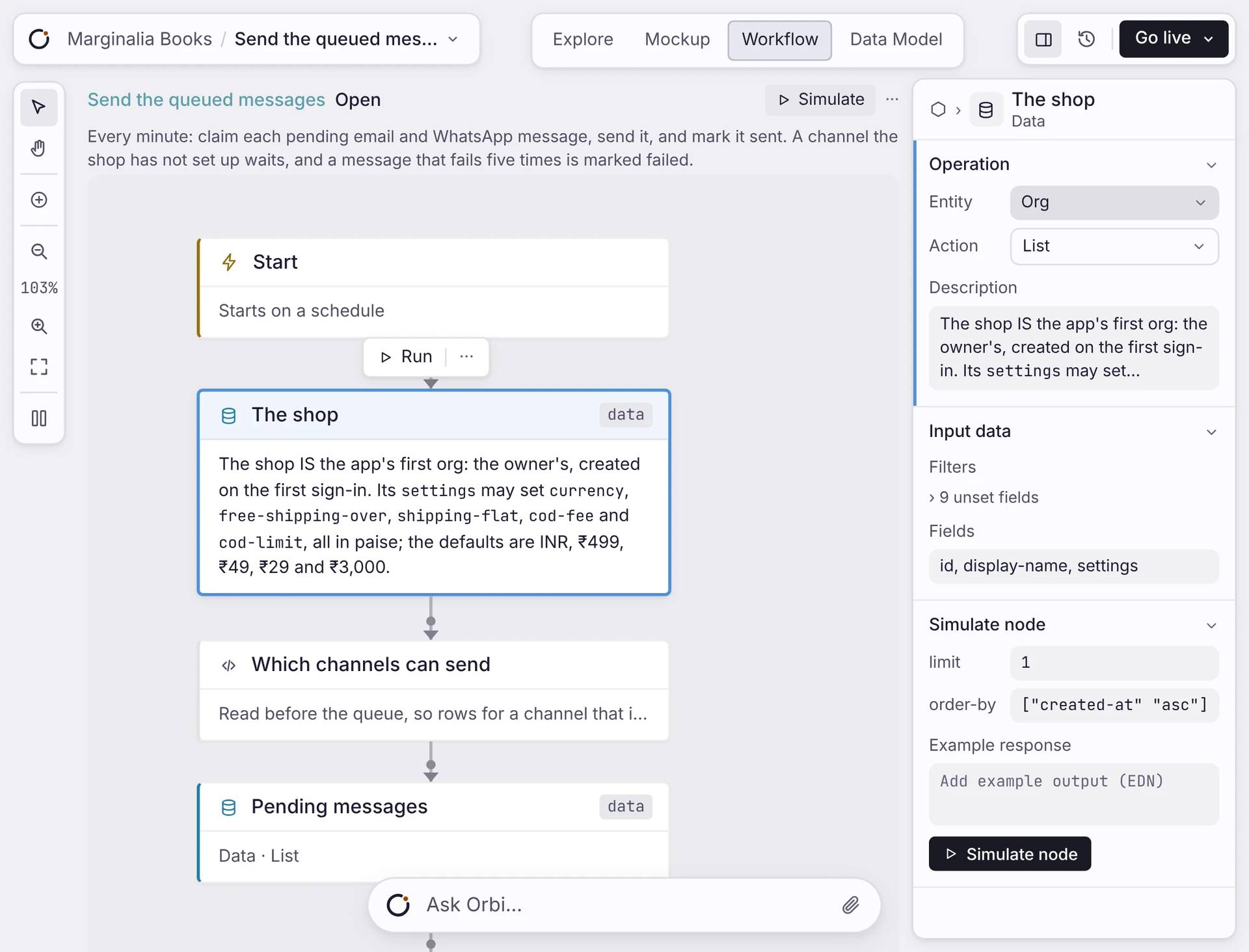
Say what happens, one step at a time, and simulate any step first. It runs on a server, not a tab.
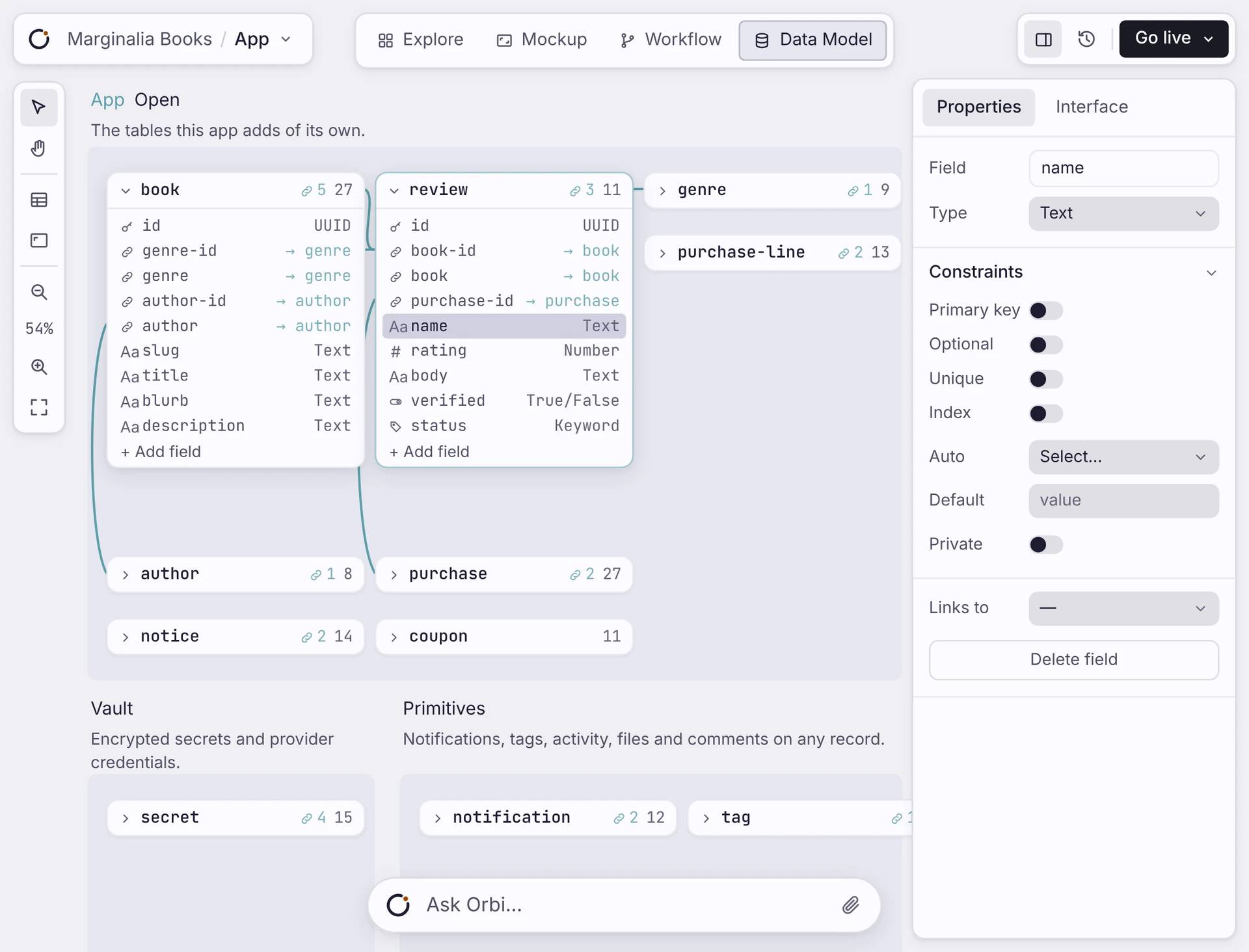
Tables and links you can read, each field’s rules in plain sight. It runs as Postgres, and your rows survive a deploy.
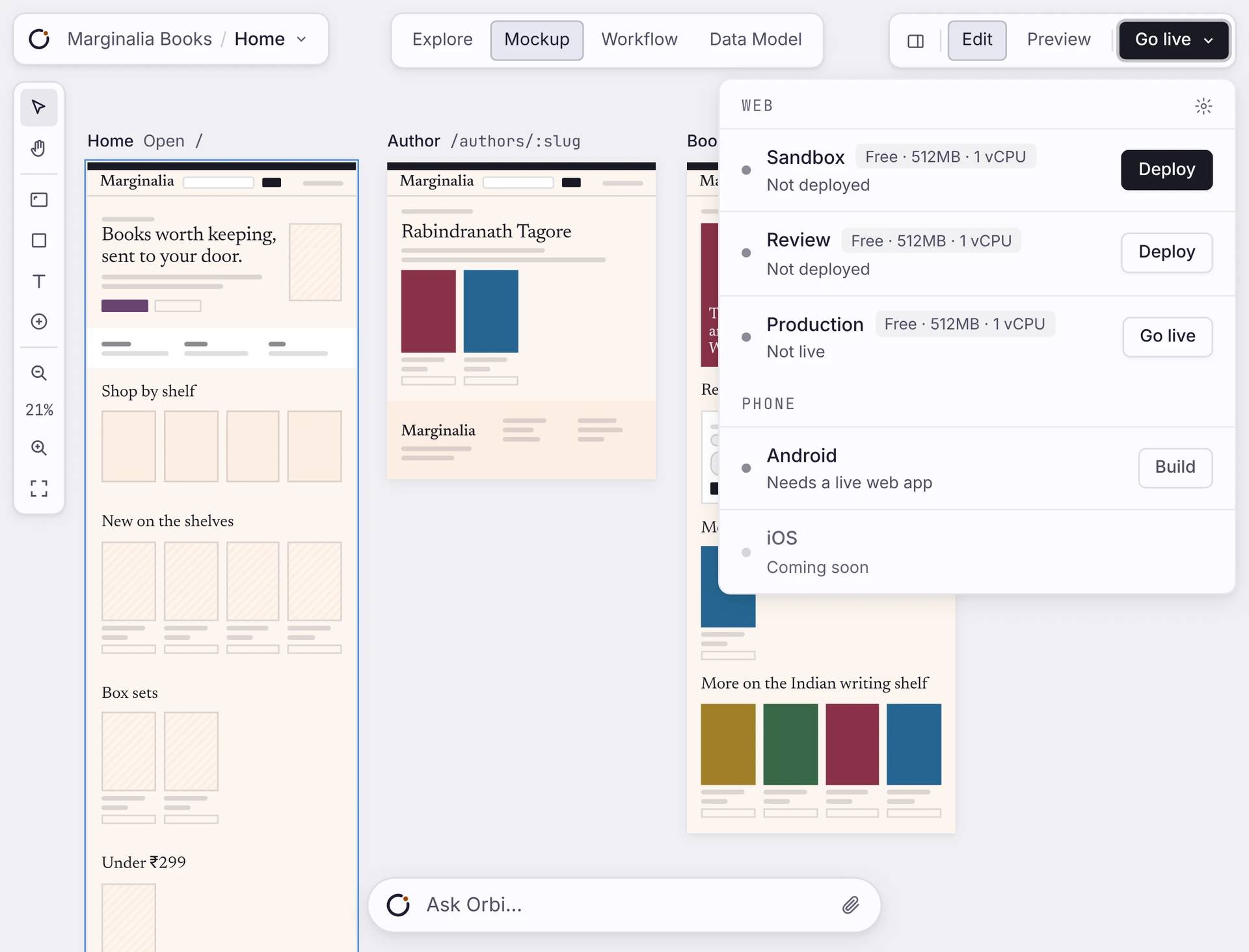
Check it in Sandbox and Review before Production. Your first live app is free, on a domain you own.
Le Flywheel Orbit
La version un est une hypothèse. Vous découvrez ce que vous avez créé la semaine où quelqu’un s’en sert. Ce que vous apprenez le vendredi, vous le changez le lundi.
Croître nourrit Explorer, et on refait un tour. Les pièces qu’un prototype saute sont celles qui rendent le deuxième tour bon marché.
Cinq entrées, une app
Claude, Codex, WhatsApp, le terminal, le navigateur. Tous lisent et écrivent la même app. Pas d’export, et pas de moment où quelqu’un vous dit d’ouvrir le vrai outil.
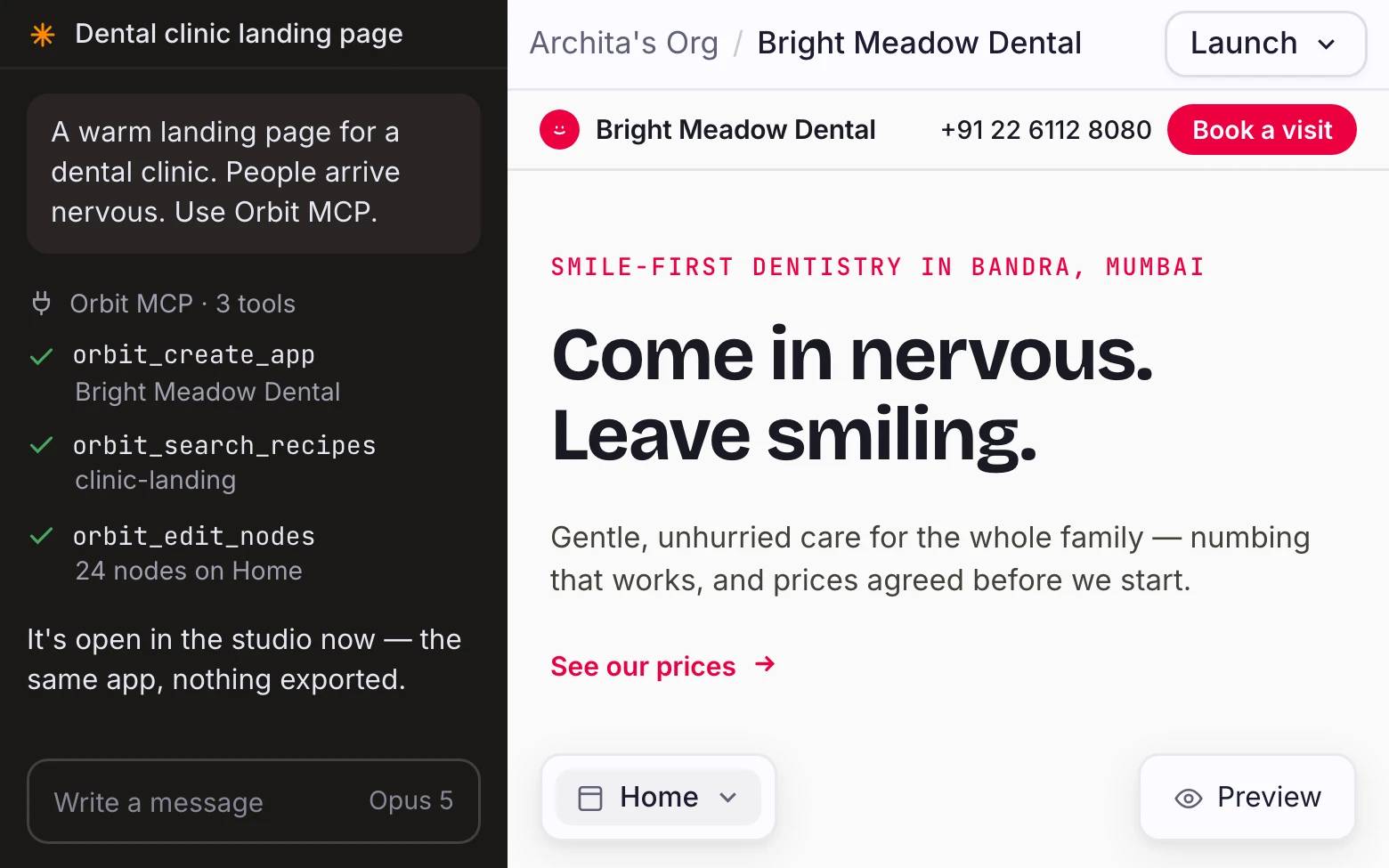
Claude Code · la même app ouverte dans le studio
MCP
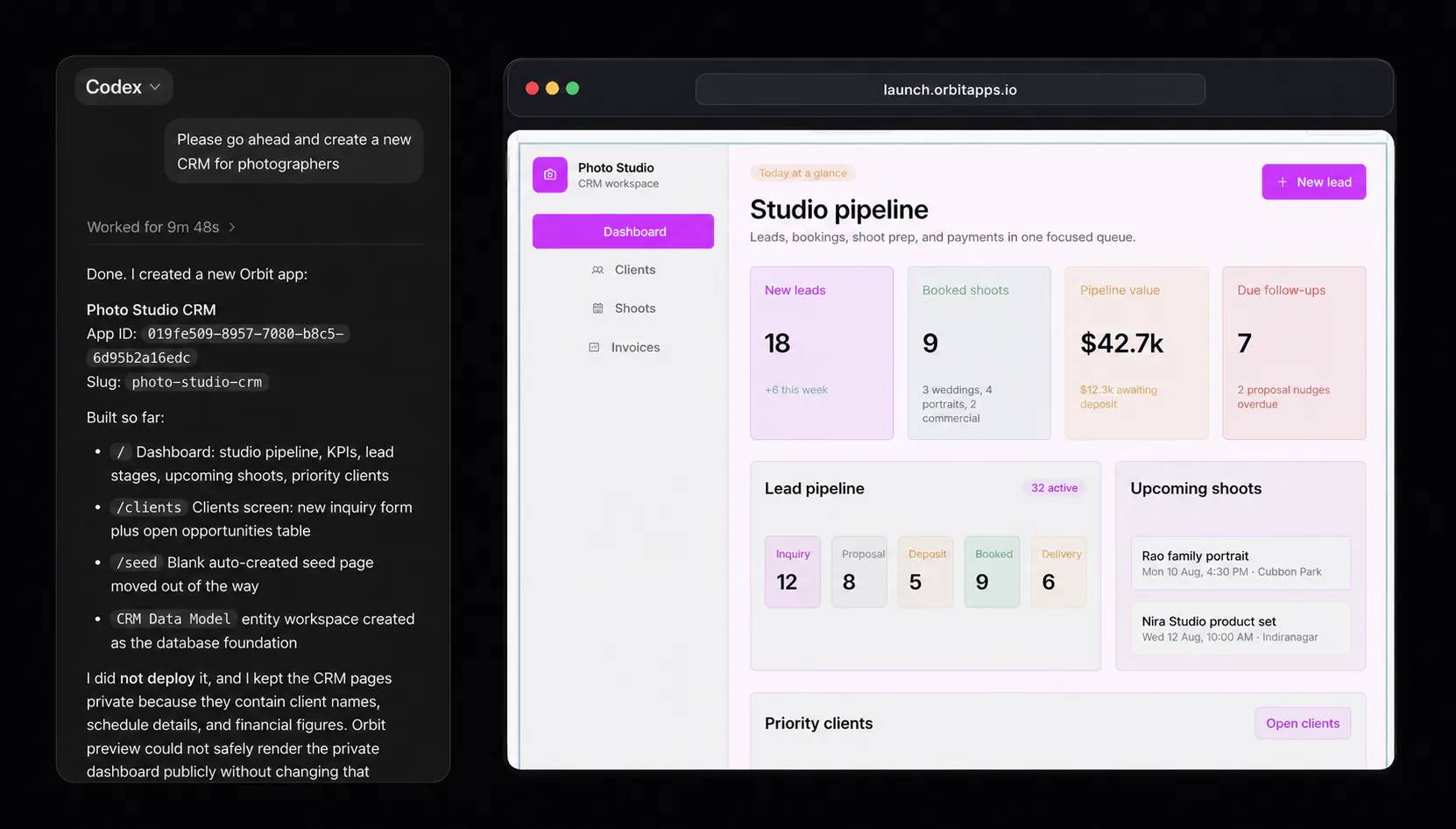
Codex · Orbit MCP
MCP
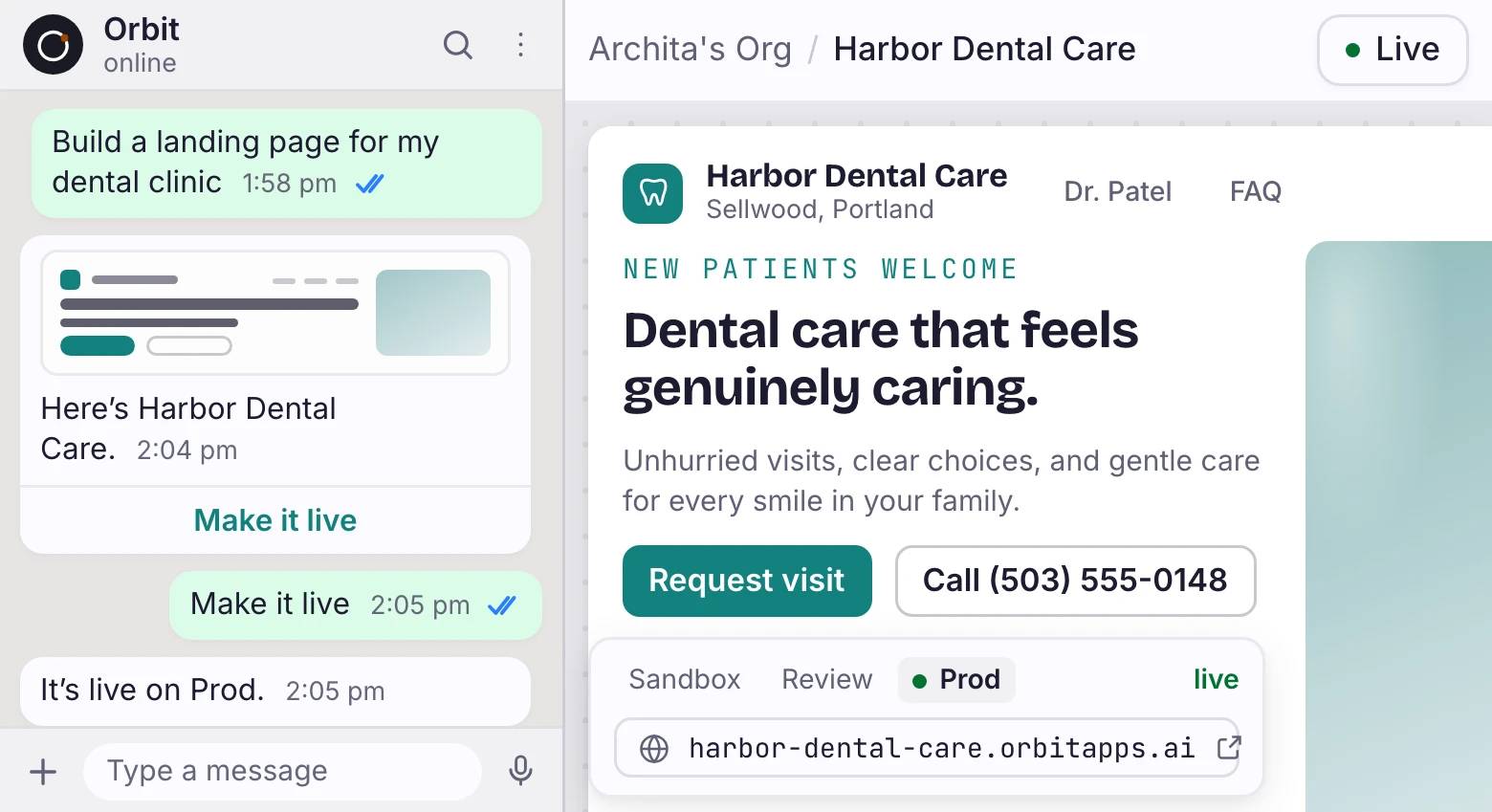
WhatsApp · les écrans reviennent en image
chat
$ orbit login
$ orbit apps create --title "Bright Meadow Dental"
$ orbit deploy create --app bright-meadow-dental
en ligne sur https://brightmeadow.dental
orbit · le CLI
terminal
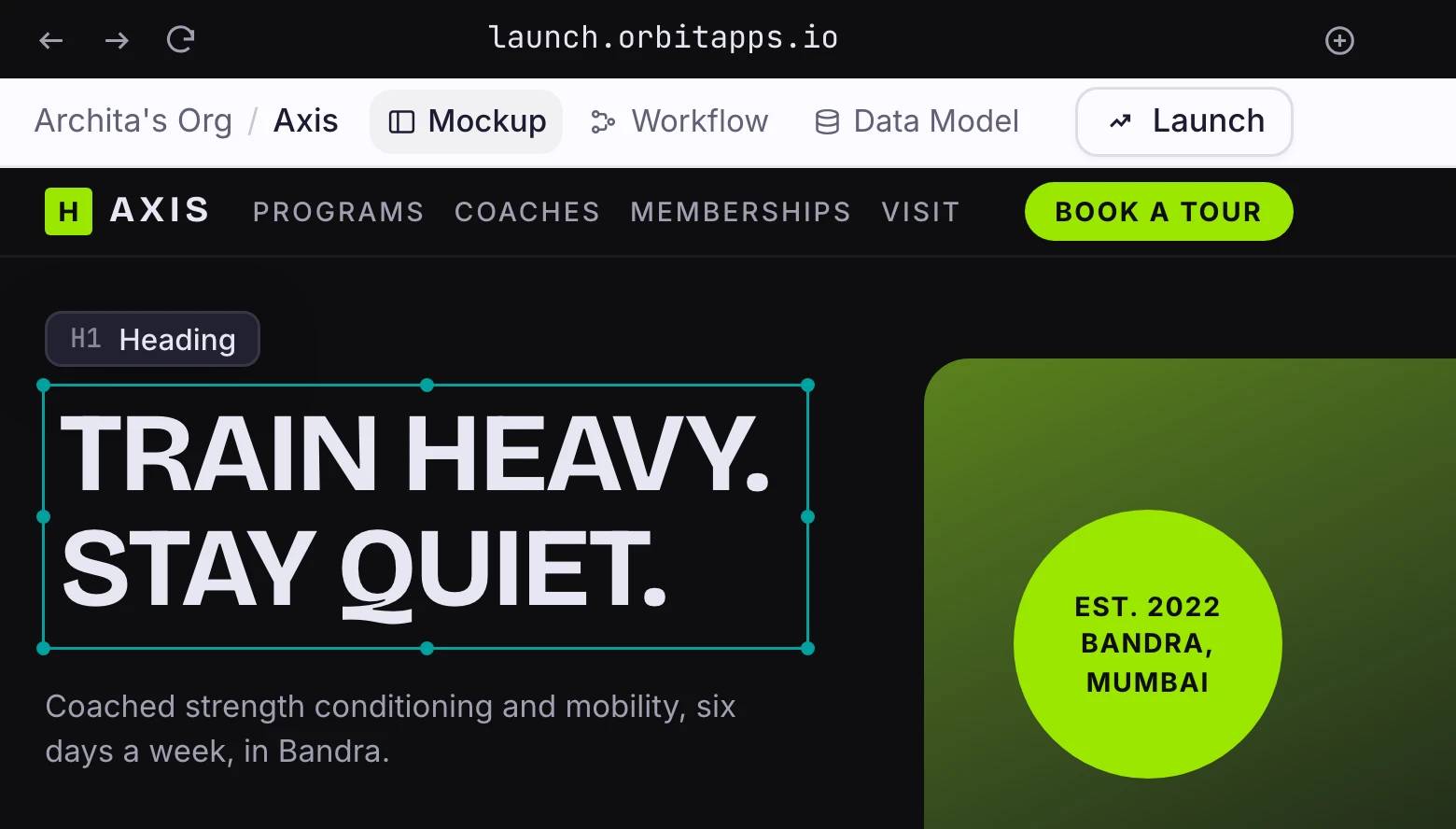
launch.orbitapps.io · le studio web
navigateur
Pointez-le sur Orbit et il travaille sur la vraie app, pas sur une esquisse.
Même connexion, même app. Le backend vient avec.
Décrivez-la dans un message. Les écrans reviennent en image. Une pression et ils sont en ligne.
Créez, modifiez et lancez sans quitter le terminal.
Tout le créateur dans un onglet. Rien à installer, et l’aperçu vous suit.
Lisez ceci avant de vous inscrire
Orbit est un pari sur la façon dont une app se crée : les données d’abord, composées, pas écrites. Tout pari coûte quelque chose. Celui-ci vous coûte quatre choses. Mieux vaut le savoir maintenant qu’en troisième semaine.
01
Orbit n’écrit pas de code
Vous composez des éléments d’interface, des intégrations et une base de données qui existent déjà. Il n’y a pas d’issue vers un fichier. Cursor, Claude Code et ChatGPT vous écriront n’importe quoi. Orbit, non.
02
Lovable, Bolt, Replit et Emergent intègrent des crédits de modèle au prix. Orbit non. Apportez votre clé et cela ne coûte rien. Sinon, chaque exécution part de votre solde.
03
Votre modèle de données, vos données et votre domaine vous appartiennent. L'app tourne sur l'hébergement d'Orbit, et nulle part ailleurs. Il n'y a pas de bouton d'export. Vos données sortent par l'API à tout moment, ou sous forme de dump de base de données sous 5 jours ouvrés. Si vous avez besoin du code ou d'un dépôt, demandez, et nous le mettons en place à la main.
Lire la politique d'export et de sortie04
Un prompt vous donne un écran. Il ne vous donnera pas une app à un million. Le reste est du travail, et il est à vous. Le mieux qu’Orbit puisse faire, c’est le rendre joyeux.
Ce que le pari rapporte
Une page que Google trouve. Des écrans qui se mettent à jour sous vos yeux. Une vraie app sur un téléphone. Un moyen pour d’autres logiciels, et l’IA des autres, de s’en servir. Chacune est d’habitude un projet à part. Ici, elles viennent toutes de l’app que vous avez déjà décrite.
morning-brief.orbitapps.io
un seul déploiement
/
rendu côté serveur, pour qu’un robot lise la vraie page
/llms.txt
les pages de votre app en texte brut, pour les moteurs de réponse
/openapi.json
OpenAPI 3.0, généré depuis votre modèle de données
/api/v1/brief
GET · POST · PATCH · DELETE, un jeu de routes par entité
/mcp
vos workflows et entités comme outils — activable par app
/manifest.webmanifest
installable depuis la même URL — activable par app
postgres
Il y a une vraie app en dessousSa propre base de données, du travail qui tourne sur un serveur pendant que personne ne regarde, et un moyen pour les gens de se connecter. Les pièces qu’une démo saute.
llms.txt
Trouvée par Google, et par ChatGPTChaque page est construite sur le serveur : un moteur de recherche lit la vraie chose. Votre app livre les fichiers que cherchent les crawlers et les moteurs de réponse.
websocket
Personne n’a à rafraîchirQuand quelque chose change, chaque écran ouvert le montre aussitôt. Orbit vérifie quand même qui a le droit de le voir avant d’envoyer quoi que ce soit.
android · pwa
La même app, sur un téléphoneVotre app devient une version Android native, avec l’icône reprise de votre propre marque. Sur n’importe quel téléphone, iPhone compris, les gens l’installent depuis un lien.
/openapi.json
D’autres logiciels peuvent s’y brancherVos données reçoivent une vraie API, et le document qui la décrit, tous deux écrits pour vous. Ce que vous avez marqué privé reste hors des deux.
POST /mcp
L’IA de vos clients peut s’en servirVotre app devient un jeu d’outils qu’un assistant IA peut appeler. Chacun se connecte avec sa propre clé : l’assistant ne voit que ce que cette personne peut voir.
Ensuite, vous payez à l’usage. Ajoutez des crédits quand vous le voulez : vos apps et votre usage de l’IA puisent dans ce seul solde. Rien n’expire, et rien n’est prélevé automatiquement.
Ce que vous payez
Son propre Postgres, la connexion, et un domaine qui vous appartient. Elle reste gratuite tant que vous la gardez en ligne, et ce n’est pas un essai.
Vous payez les heures où il est en ligne, et l’arrêter arrête le compteur. Un site en ligne et son aperçu comptent pour deux.
Puisés dans le même solde, sans clé à garder ni seconde facture. Apportez votre clé et cela ne puise rien.
Les crédits n’expirent jamais, ceux que vous avez payés et pas utilisés sont remboursables, et rien n’est prélevé automatiquement.
Voir ce que coûte chacunRéponses claires
Oui. Ouvrez la surface et changez-la vous-même, ou dites ce que vous voulez changer et laissez Orbit faire la modification.
Un backend. Chaque app reçoit son propre Postgres, des Workflows qui tournent sur un serveur, et les tables et les gardes de la connexion. Ajoutez un bouton de connexion et vos identifiants Google pour l’activer.
Le prix du fournisseur plus 30 %. Je facture cela pour qu’un seul solde couvre chaque appel de modèle, de recherche et d’image que fait votre app, et que vous ne déteniez jamais de clé ni ne rapprochiez une seconde facture. Ajouter des crédits rapporte 5 % à 20 %, et votre propre clé n’ajoute rien.
Votre Data Model, vos données et votre domaine sont à vous, et c’est vous qui faites les changements. L’app tourne sur un hébergement managé, donc il n’y a pas d’export de code dans le produit. Si vous avez besoin du code ou d’un dépôt pour un client, demandez et nous le mettons en place à la main.
Modifiez la surface et redéployez. Ajouter un champ migre tout seul. Un changement qui supprimerait une colonne ne s’exécute jamais — Orbit le saute et vous demande d’approuver le reste.
Clojure, ClojureScript, React et Postgres. Vous n’avez jamais à y penser, et la plupart des gens n’y pensent jamais.
À vous de jouer
Vos clients s’en serviront. Leurs agents aussi. Créer une app est déjà assez dur. Cela n’a pas à être terne. La première est gratuite, sur un domaine à vous, et personne ne vous demandera de carte.
 Créé avec Orbit