Build backend systems without boilerplate.
Describe what your backend should do. Orbit turns it into data, APIs, auth, jobs, and launch setup you can refine.
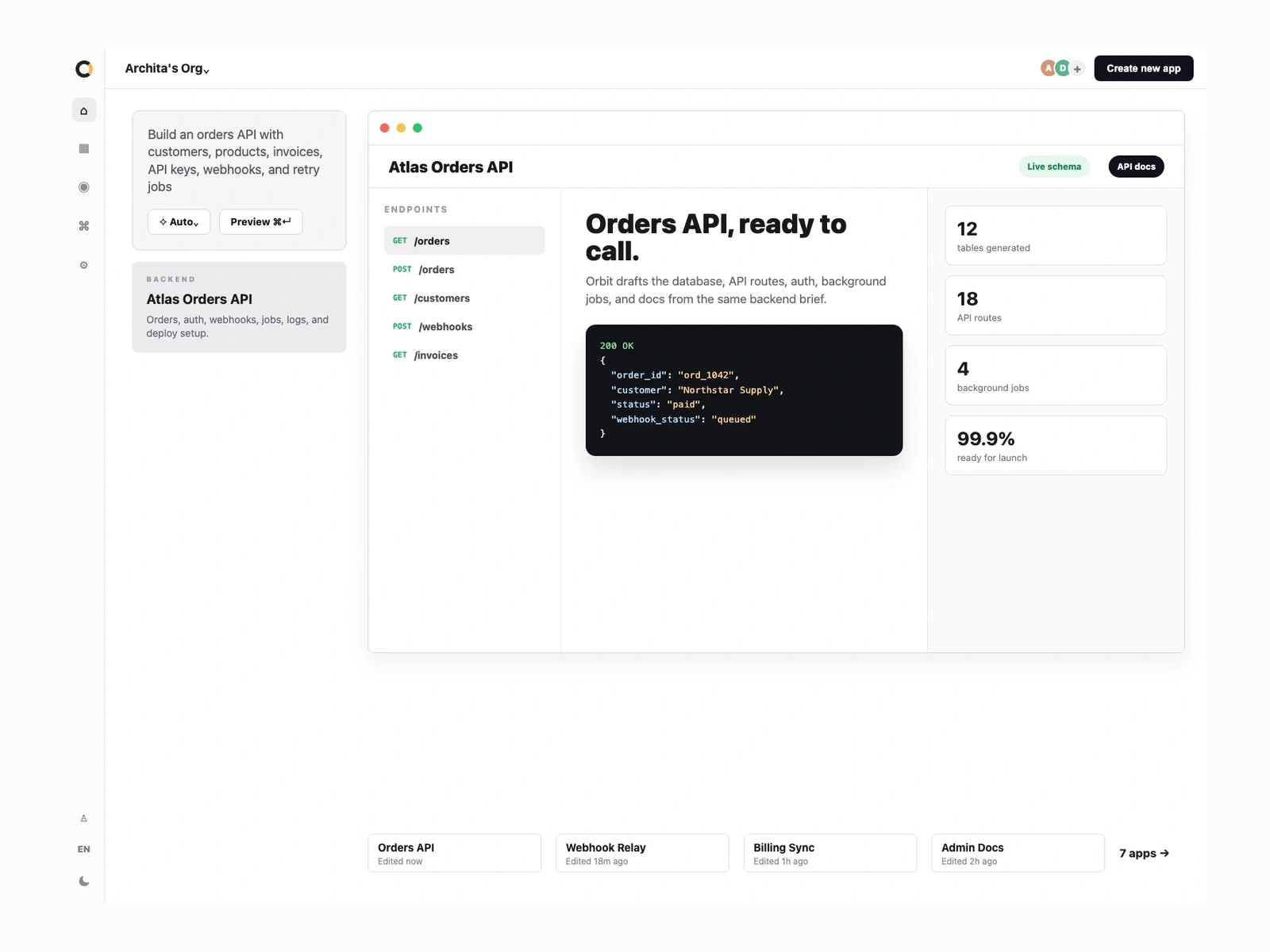
Orbit backend builder walkthrough
A complete backend, kept together.
Orbit keeps your data model, APIs, auth, background jobs, and launch setup connected as the backend evolves.
Data
Tables and relationships shaped from the backend brief.
API
Routes, validation, auth, and docs generated together.
Auth
Keys, roles, tenants, and permissions included.
Jobs
Webhooks, schedules, retries, and background work.
Launch
Hosting, HTTPS, domains, and deploy history.
How your backend comes together.
You can turn a backend idea into routes, data, jobs, and launch setup without switching tools.
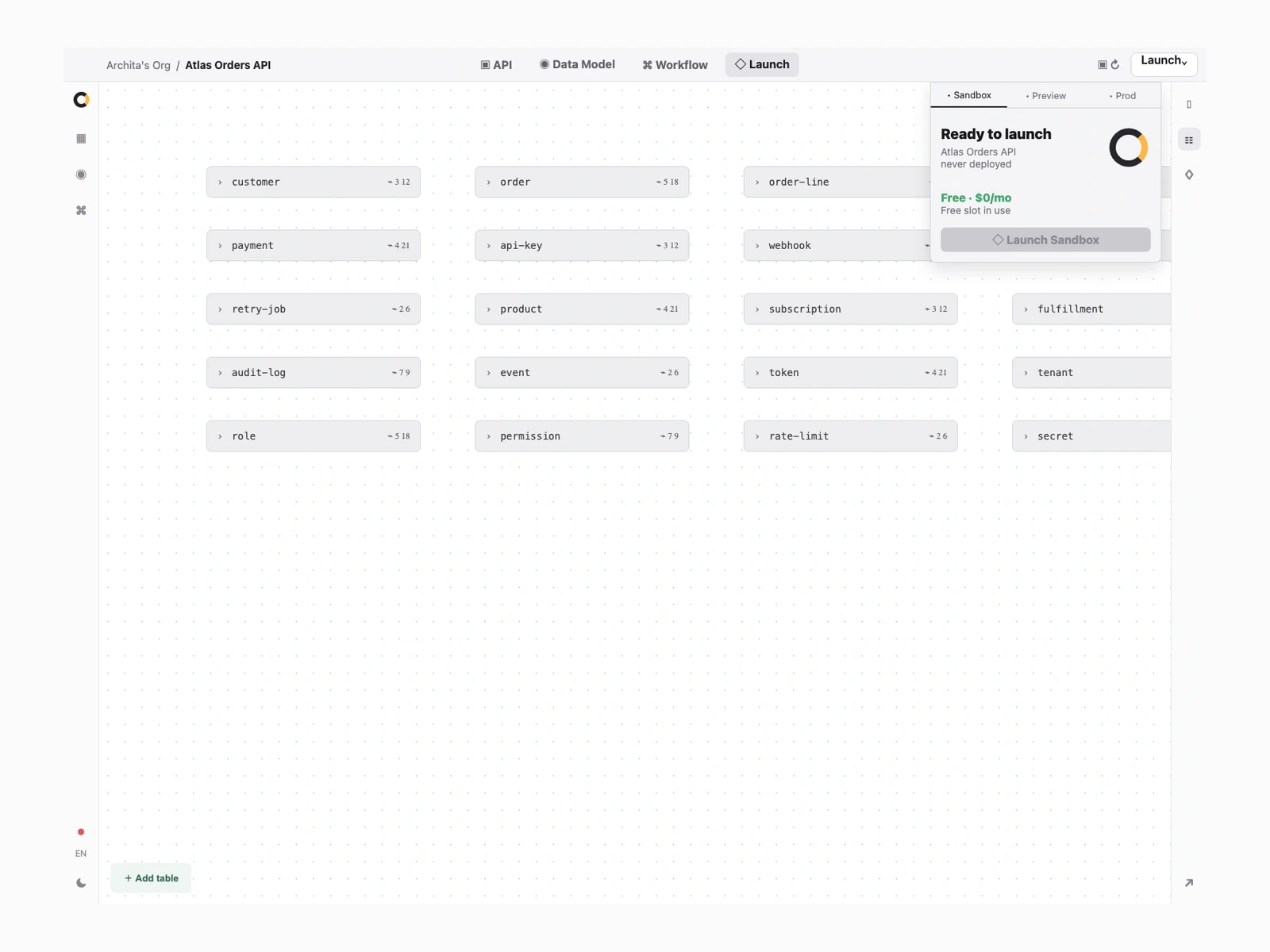
Get the backend ready before it ships.
Review the API, check the data model, and adjust jobs and webhooks before going live.
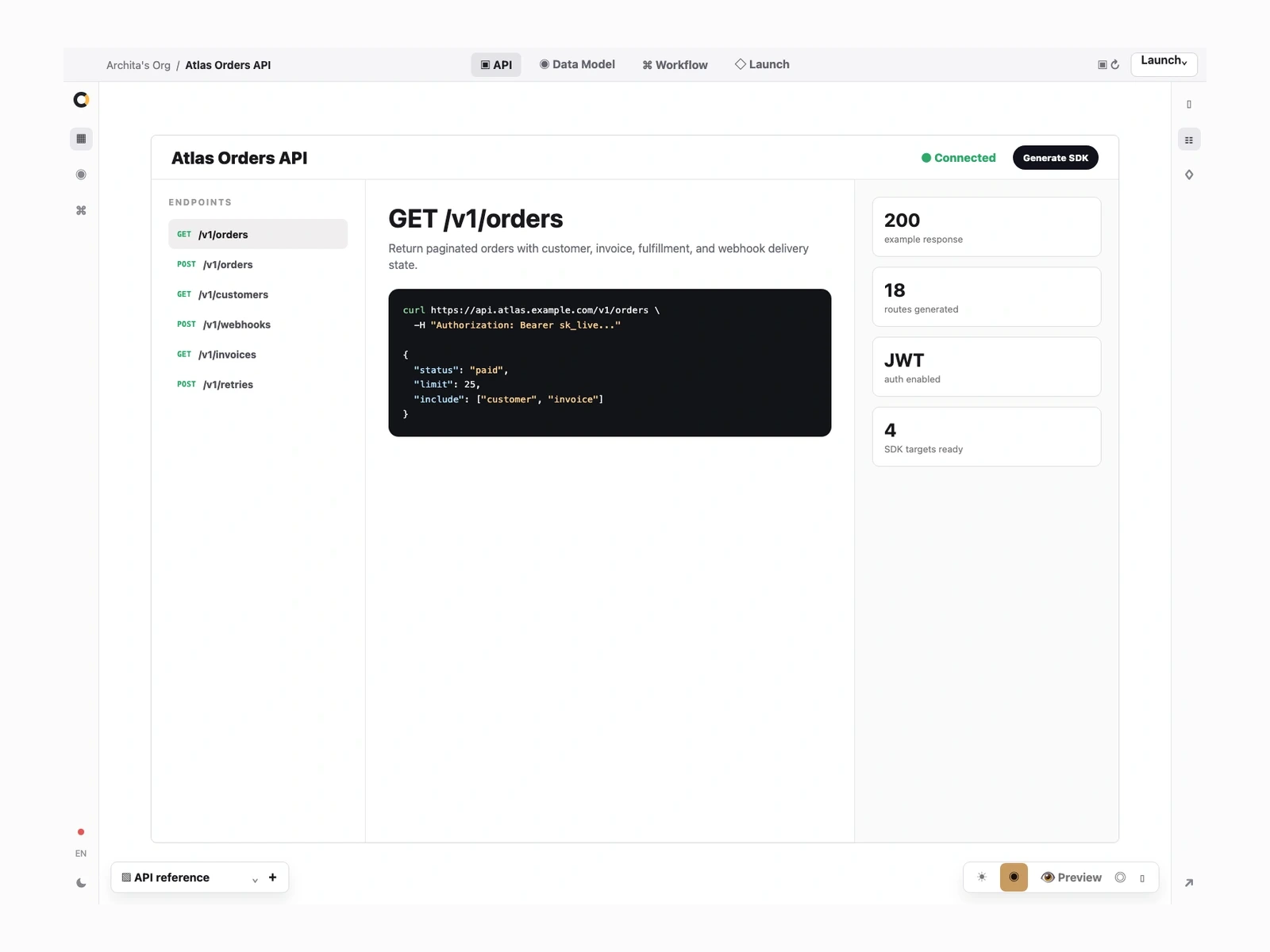
Review the API
Check routes, request shapes, responses, auth, and docs in one place.
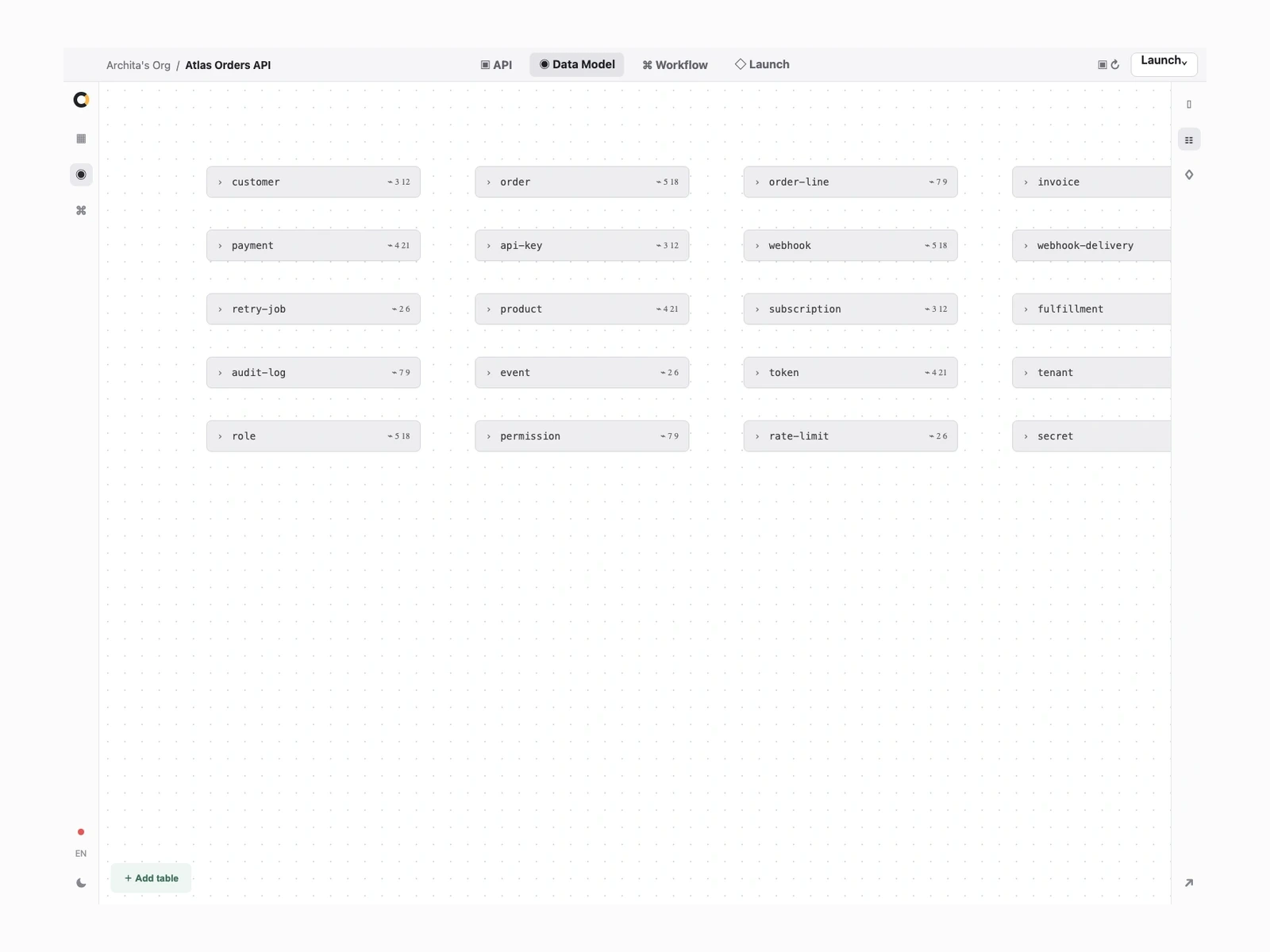
Inspect the schema
See customers, orders, invoices, API keys, webhooks, jobs, and logs before launch.
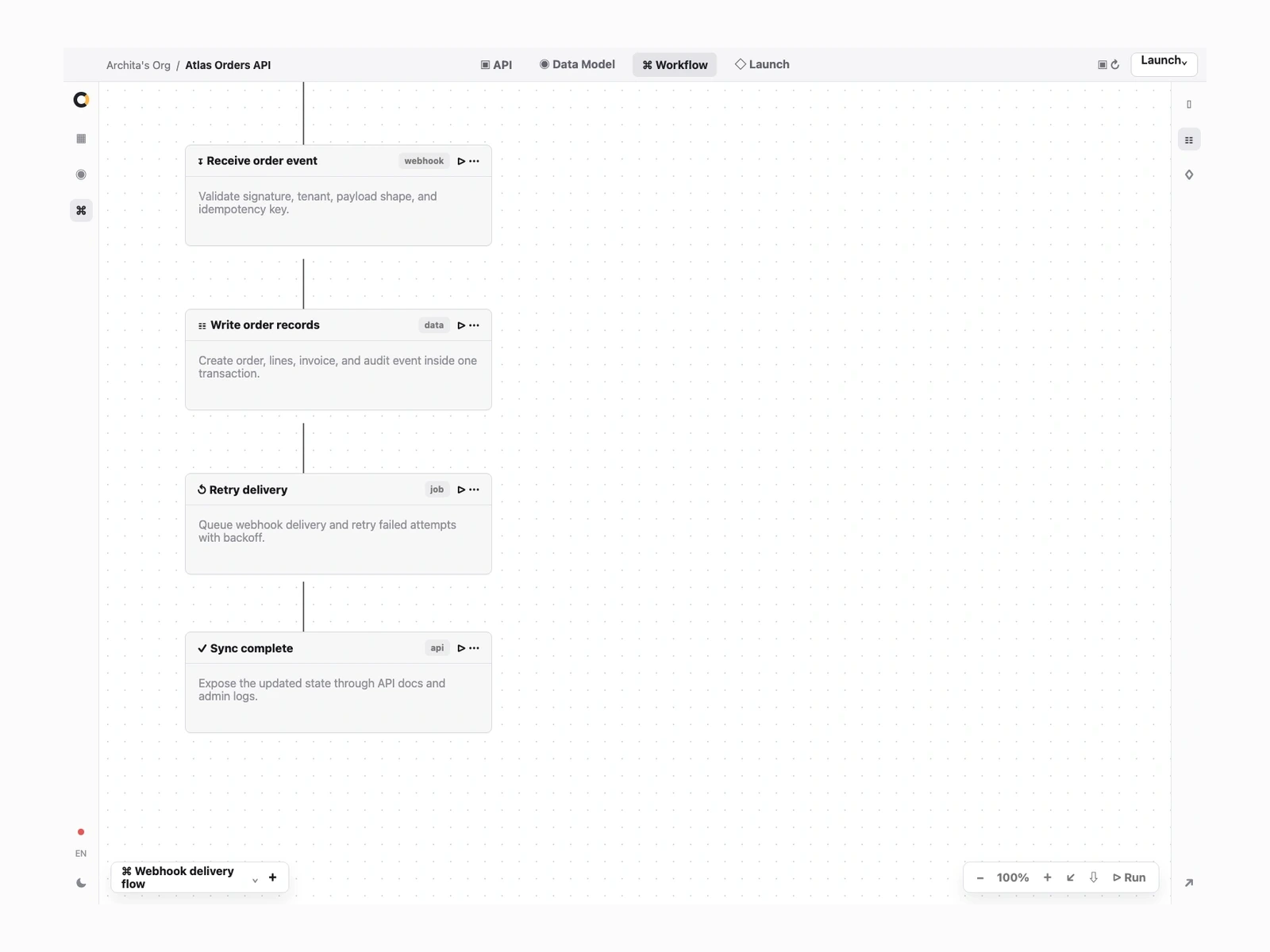
Tune the jobs
Adjust webhook handling, retries, scheduled syncs, and follow-up work.
Backends & APIs, answered.
Do I get a real API?
Yes. Orbit builds API routes over your data with auth, jobs, docs, and deployment setup included.
Can I connect my own frontend?
Yes. You can call the API from any frontend, mobile app, automation, or external service. You can also add an Orbit-built UI in the same project.
Is the database really mine?
Yes. Each backend gets its own isolated Postgres database, and you can export or delete your data when you need to.
Can it handle webhooks and background jobs?
Yes. Orbit can generate webhook handlers, scheduled jobs, retry flows, and the data they depend on.
Can I launch it on my own domain?
Yes. You can deploy the backend on a domain you own with HTTPS handled for you.