

Platform · Data model
Your records, in tables you can see.
Say what the app keeps. Orbit makes the tables and links them.
- Read bake and order0:01
- Add the waitlist0:02
- Owner’s rows only0:04
- REST and MCP on0:05
Tables that match the shop.
Orbit reads the tables the shop has and adds a waitlist. Each person sees only their own place, and the API is on.
 /Corner Loaf/Shop data

Built in
The tables most apps need, already there.
Sign-in, people and payments come with every app.
Identity
always thereprofile
firstName · lastName
locale · timezone
member
role · status
profile-id → profile
org-id → org
org
an organization
Your tables
Corner Loaforder
owner’s rows only
profile-id → profile
bakes
pickup
status
waitlist
owner’s rows only
profile-id → profile
bake
Payments
when you chargeplan
subscription
payment
invoice
wallet · ledger
Access and API
Each row, to the right person.
The same rules hold in the app, for other apps and for AI assistants.
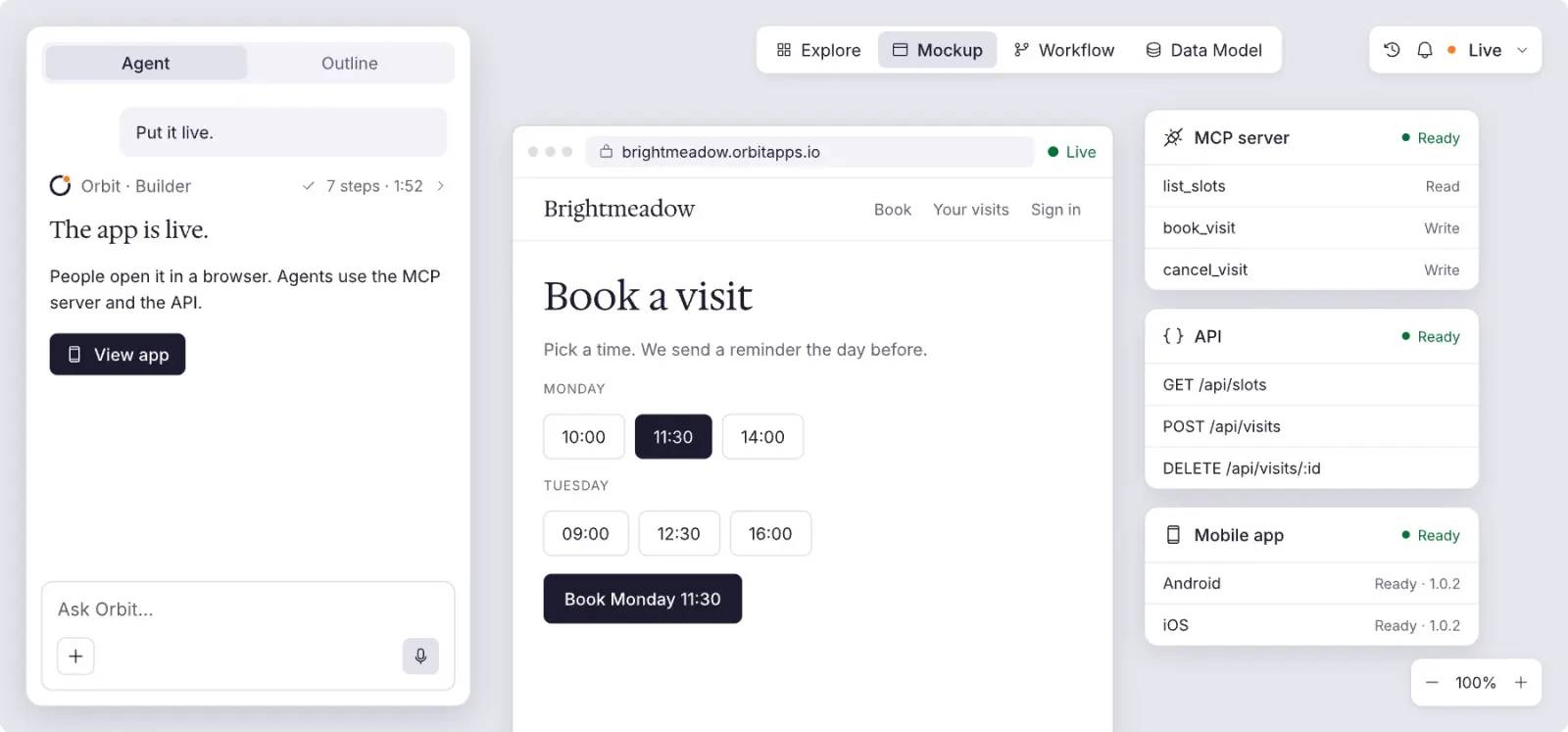
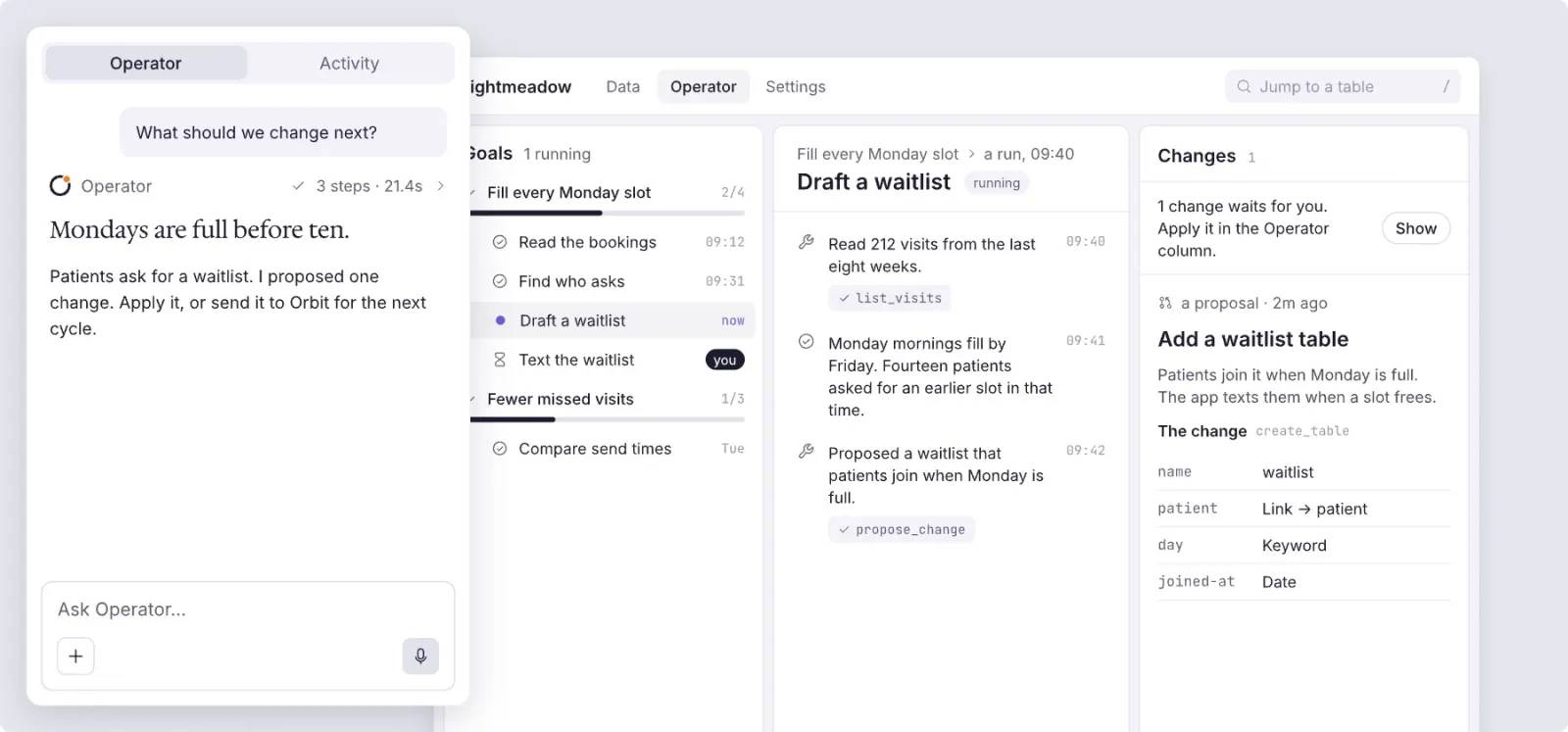
About the data model.
Yes. Each app has its own Postgres database, and the tables on the canvas are the tables it stores.
Yes. A safe change, like a new field, moves your data for you. Orbit blocks a change that would delete data until you confirm it.
The rule on each table decides. Set a table to owner’s rows only, and each person sees their own. The same rule holds in the app, in the API and for AI assistants.
Say what the app keeps.
Orbit makes the tables and links them.